
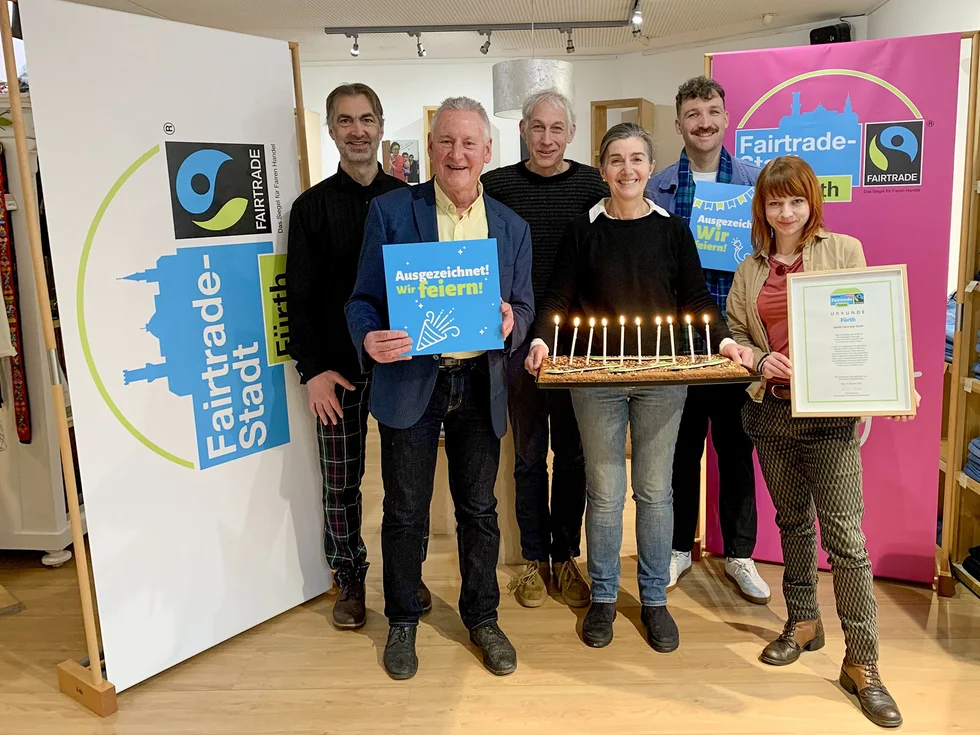
One of Paisley’s best kept secrets is that it has a twinned city in northern Bavaria, Germany, called Fürth. Back in September last year, when I met Philipp Abel from Fürth, at the International Fair Trade Towns conference in Edinburgh, little did I realise that I’d join him to celebrate Fürth’s 10 years as a fair trade city.
Philipp is head of sustainability at the city council and one of his areas of responsibility is fair trade. At the Edinburgh conference he was keen to establish fair trade links with Paisley and even managed to visit our shop and True Origin’s warehouse. In the next few months, Philipp and I met a few times via Zoom and attended each other’s fair trade meetings online. Coming out of those discussions was a desire to share ideas and to work together to promote fair trade in our respective towns. We even managed to interview Philipp for our podcast.
Monday 9th February 2026
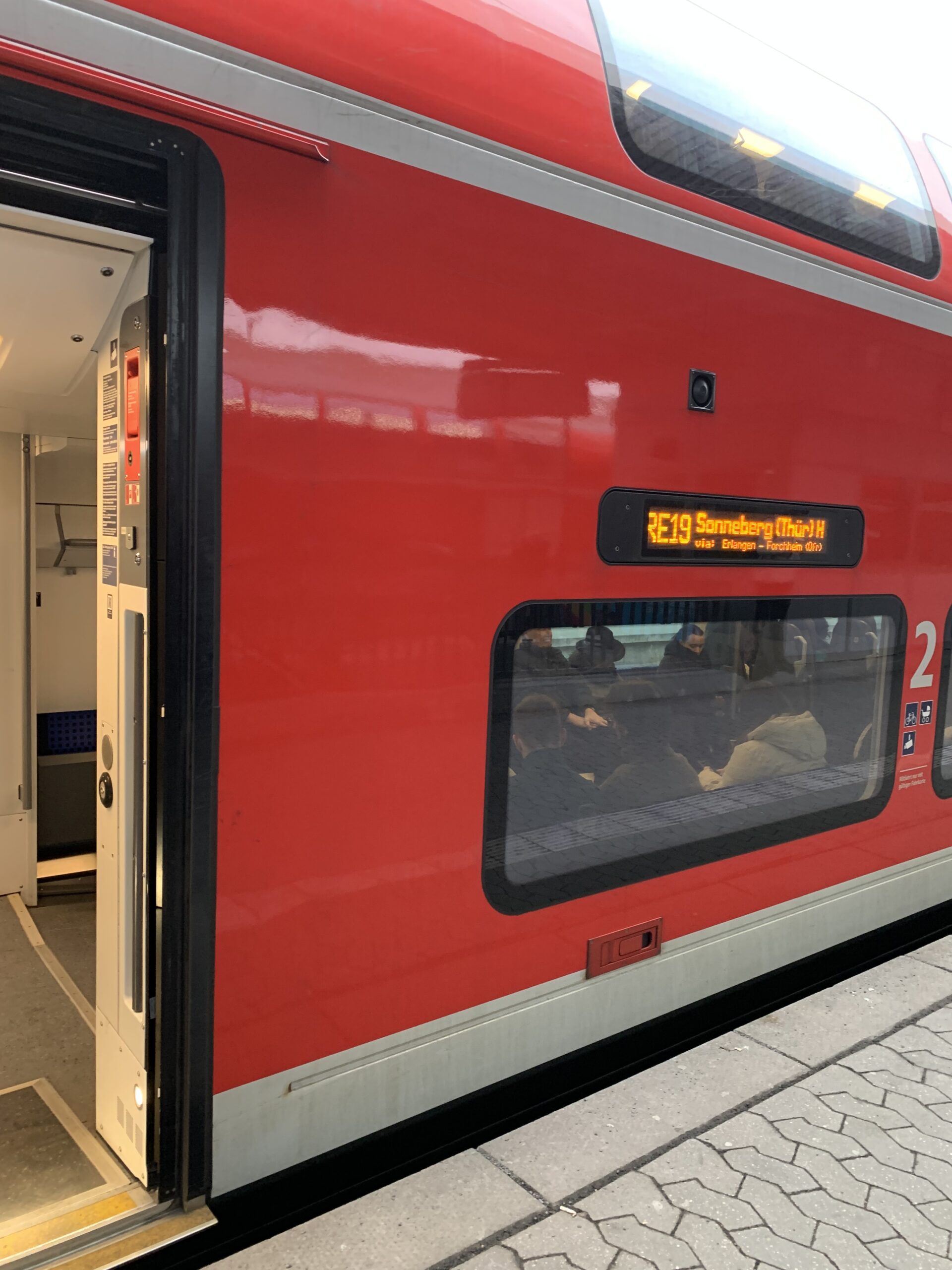
Skip ahead 5 months and I’m standing on the platform of Fürth railway station, having just travelled in my first double decker train from Nuremberg. It was hard to believe that, from never having heard of his city, I was now standing in it, preparing to take our twinned towns’ relationship to a new level.
Philipp met me at the bottom of the stairs and, after a warm welcoming hug, walked me across their city. Around the station, the area is quite modern, with paved squares used for markets and events, and pedestrianised streets full of shoppers and office workers. There aren’t many tall buildings so it has a friendly, small town feel. Philipp travels everywhere by bike (as befits his role at the council), so he wheeled his bike next to me as we talked about what the week held in store.
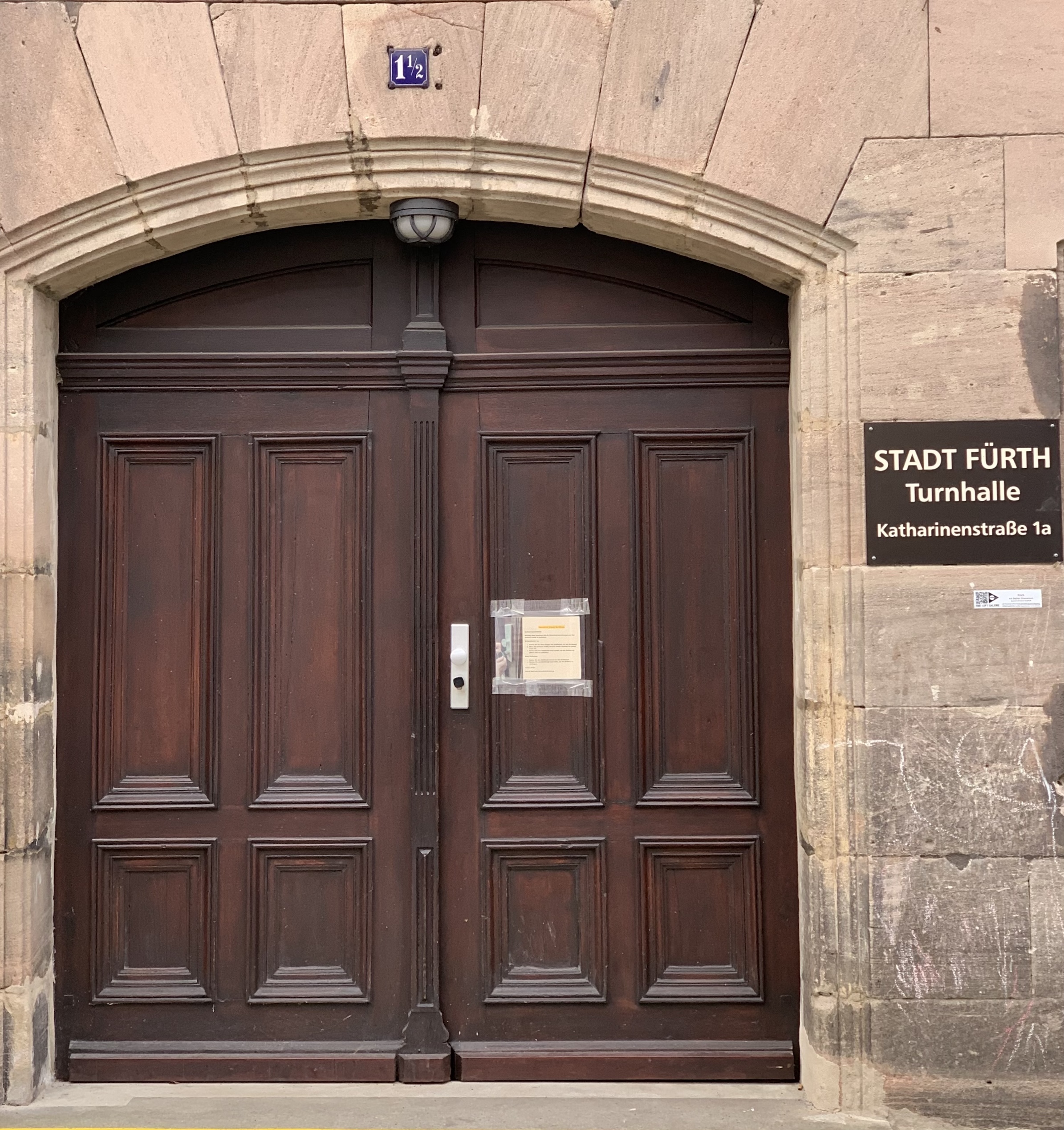
First stop was the hotel where I was staying in order to check in. We agreed to meet again at 6pm for dinner, which gave me time for a shower. The area was quiet and not far from the older part of the city. Whilst I was waiting for him to arrive back at the hotel, I took a wander around and found this unusual door number…
Dinner had been booked at a traditional Franconian restaurant not far away, called the Gaststätte Zum Stadtwappen. People in Fürth and Nuremberg identify themselves as Franconian, rather than Bavarian, and have their own dialect and culture. The restaurant itself had a cosy feel with low dark wooden beams and signed pictures on the walls of international celebrities. One of its specialities was their delicious baked carp which was complemented by a glass of Grüne, a beer from the local Tucher brewery. (Apologies, this is supposed to be a trip about fair trade and not the local gastronomy!) It was a real delight to be introduced to a local culture that I’d had no idea of 6 months before.
Tuesday 10th
The next morning, Philipp met me at 9am and took me for breakfast at a local cafe. He had arranged a city tour for me, with one of their local guides, that started down by the river at their theatre, Fürth Kulturforum. Strictly speaking, the theatre is just outside the city on the other side of the bridge. In the past, traders arriving on their carts would have had to cross the river at the ford, before there was ever a bridge, to bring their produce to market.
Interestingly enough, Paisley also has a ford, and was on the pilgrimage route from Glasgow to the Isle of Whithorn in Galloway. In fact, the name Fürth means ford. The similarities don’t stop there. Fürth is bounded on two sides by two rivers, the Rednitz and the Pegnitz, which join at one end of the town. In the same way, the White and Black Cart rivers join at Inchinnan just outside Paisley. Fürth is only 7 km from the much larger city of Nuremberg, similar to Glasgow being only about 10km from Paisley. Both towns have strong traditions of social justice and fairness. They also have many historic buildings with Fürth’s St. Michael’s church dating back to the 1100s and Paisley’s Abbey to the 9th century.
Going over the bridge took me into the oldest part of the city which boasted coach houses, pubs, and squares dating back to the 17th century.
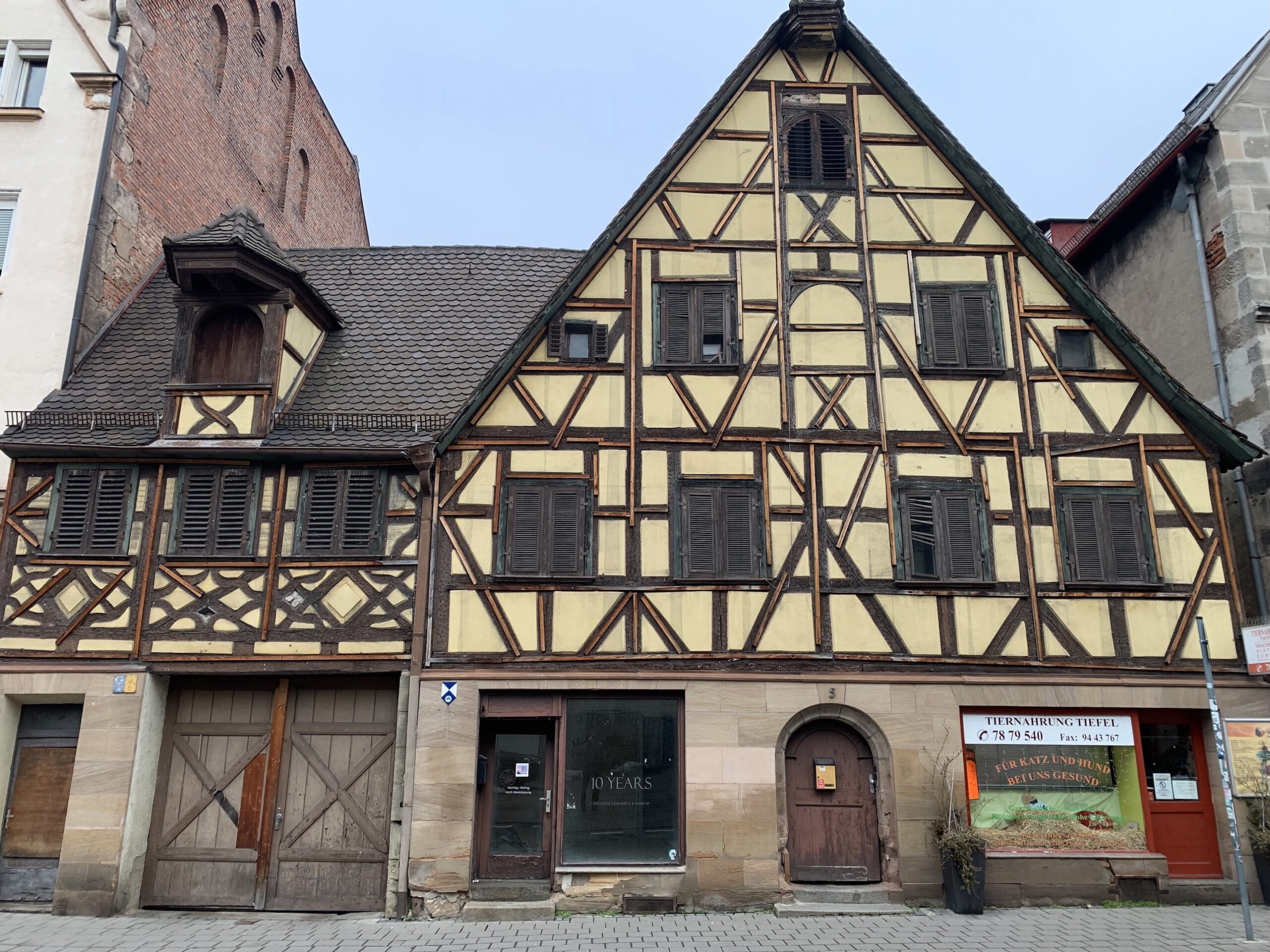
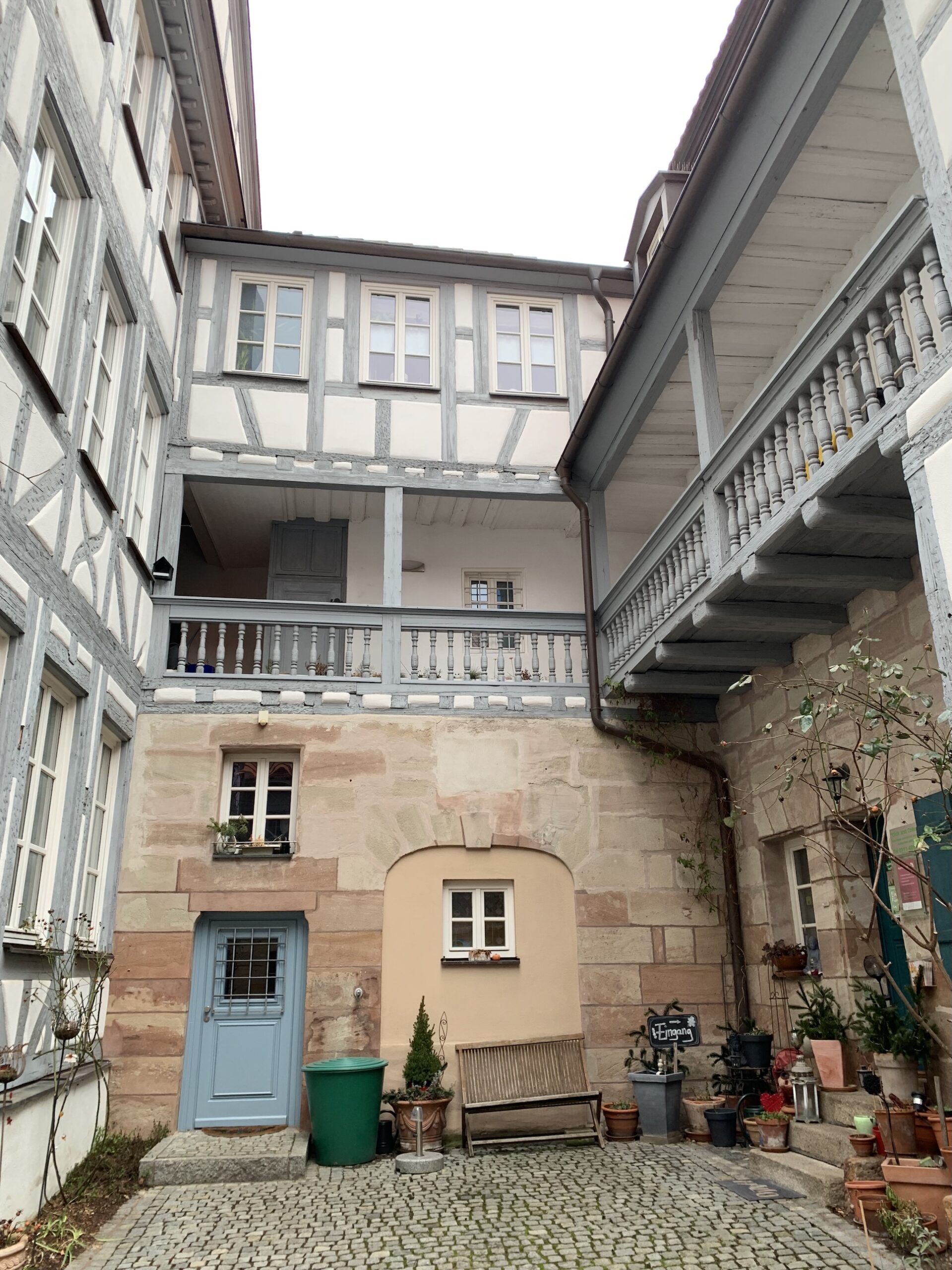
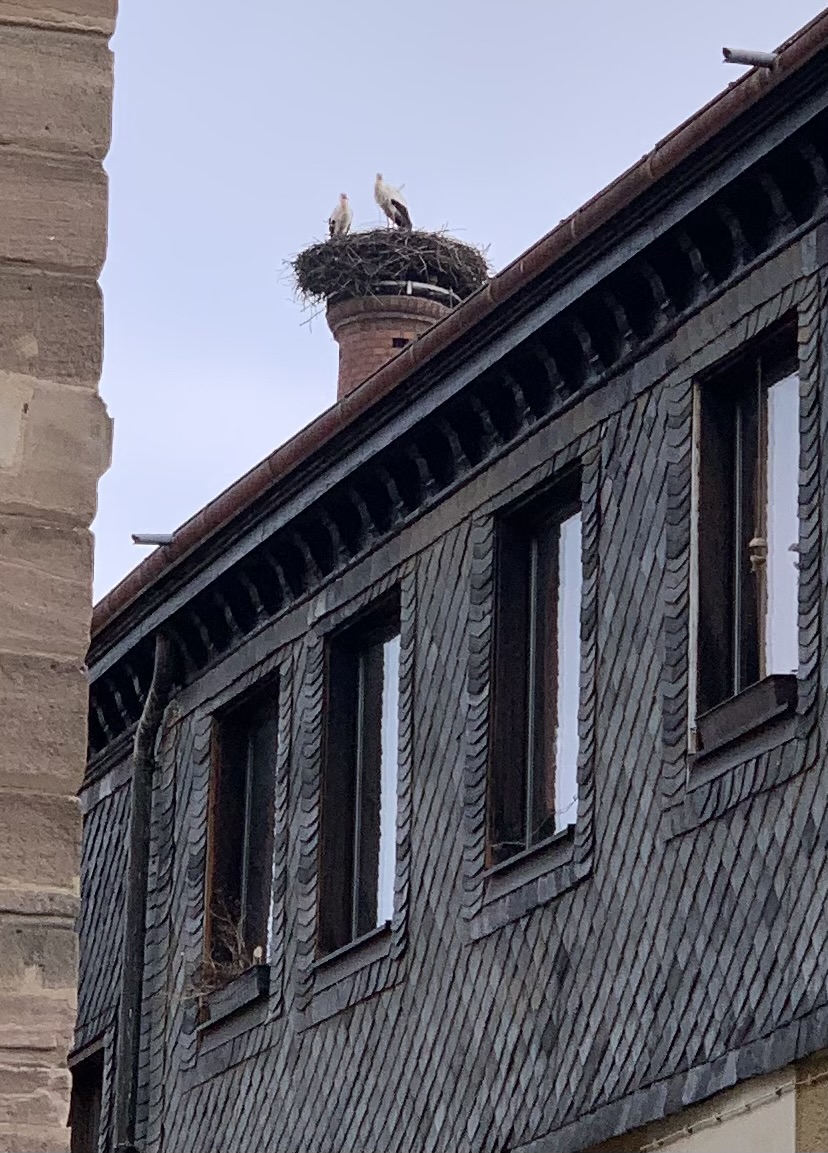
For all its beautiful buildings, the highlight for me was seeing my first stork. My guide, Andrea, had mentioned that storks arrive back in Fürth in spring ready to start nesting on top of the tall chimneys. Although it was still quite early in the year, she thought that she’d heard them earlier in the week. As we walked through the narrow cobbled streets she asked me if I’d heard them. Not knowing what they sounded like, I couldn’t say that I had. We turned a corner and I heard my first stork. It sounded like a power crazed camera assistant who had got hold of the clapper board and was clacking it away. We walked to a square by an old furnace, which had a tall brick chimney (not unlike the one near Mile End Mill in Paisley), and I saw the nest with two storks on it.
Like many people in the city, Andrea’s English was excellent. I claim to speak German very poorly, but I hardly spoke it during the week as I was ashamed at how bad it was compared to the English of the locals. In addition, Andrea had been to Paisley back in 2018 to mark 50 years of our two towns being twinned. She’d even attended a special celebratory meal in Paisley Abbey, only 50m from Rainbow Turtle!
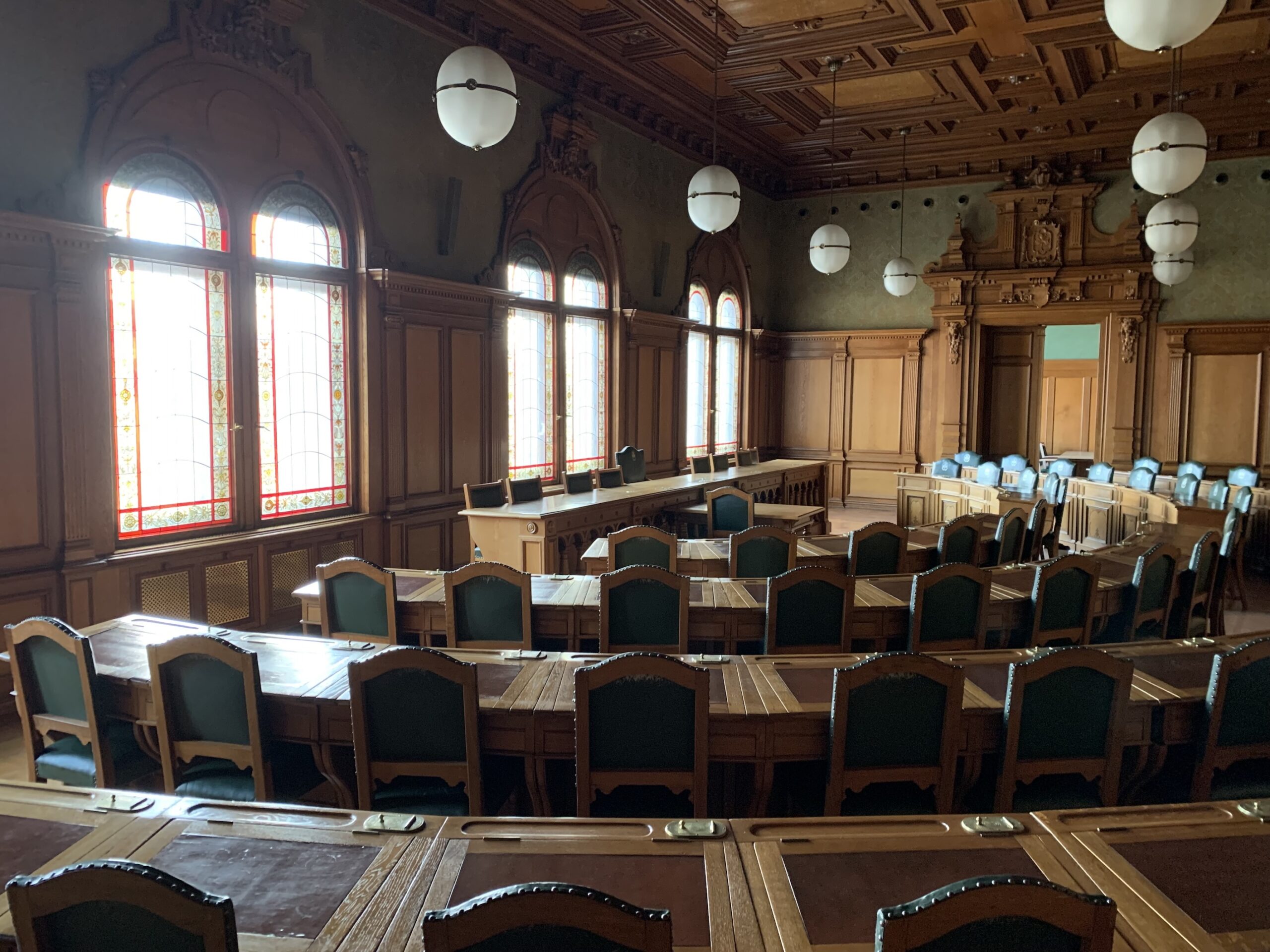
Our tour ended at the city hall, which dated back to the middle of the 19th century, with a visit to its wood panelled council chamber.
And no city hall is complete without its links to Paisley on display…
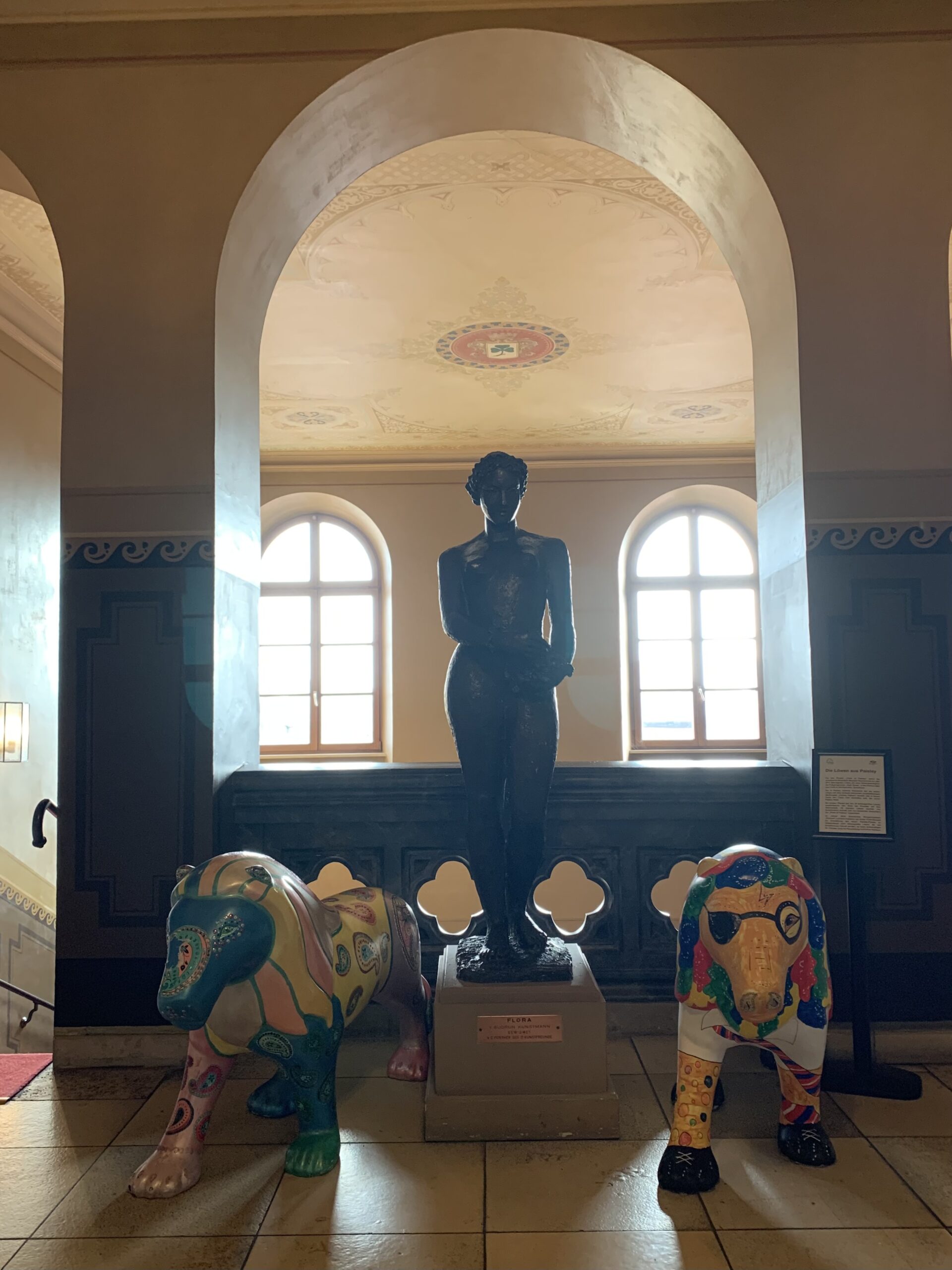
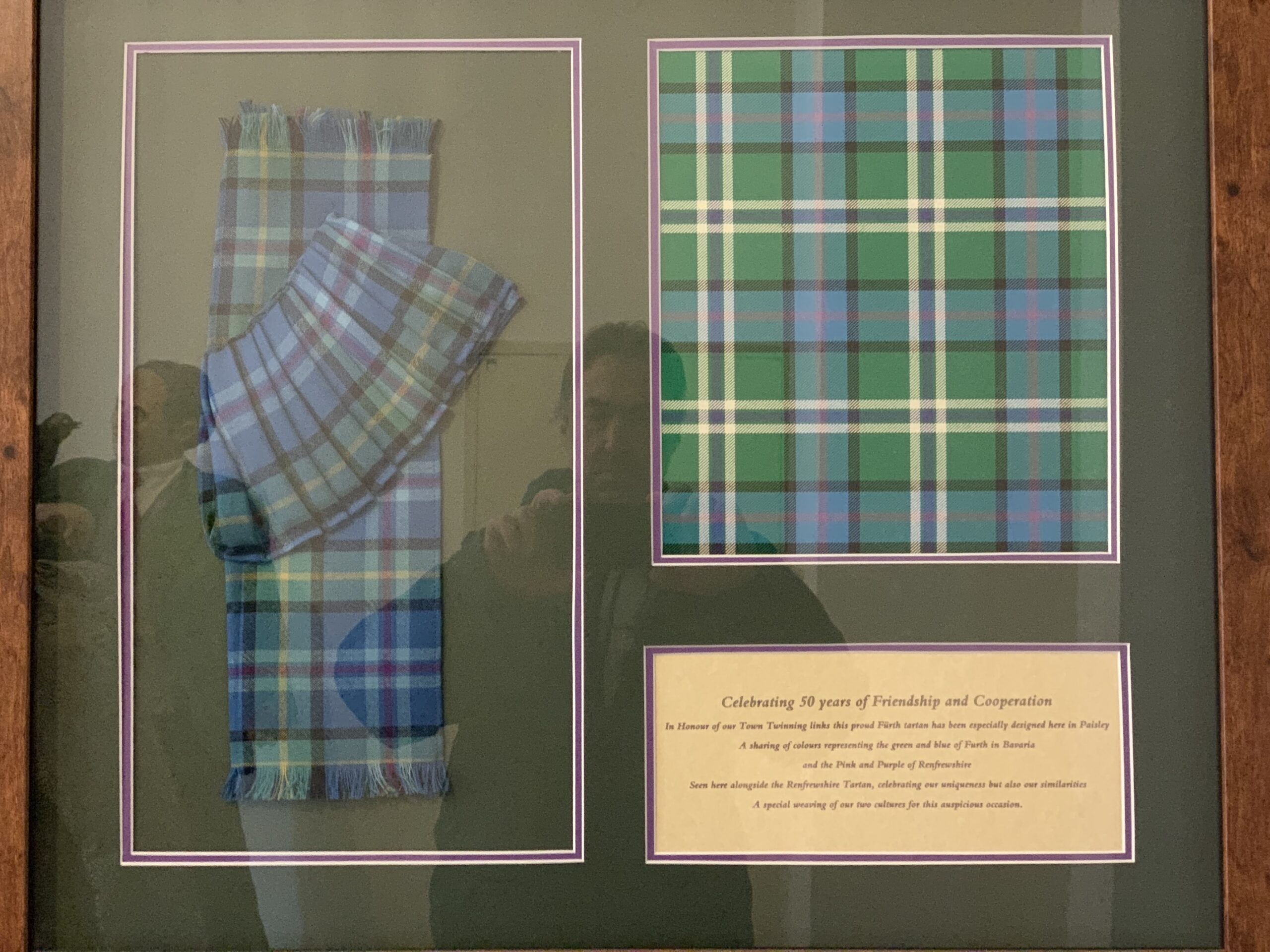
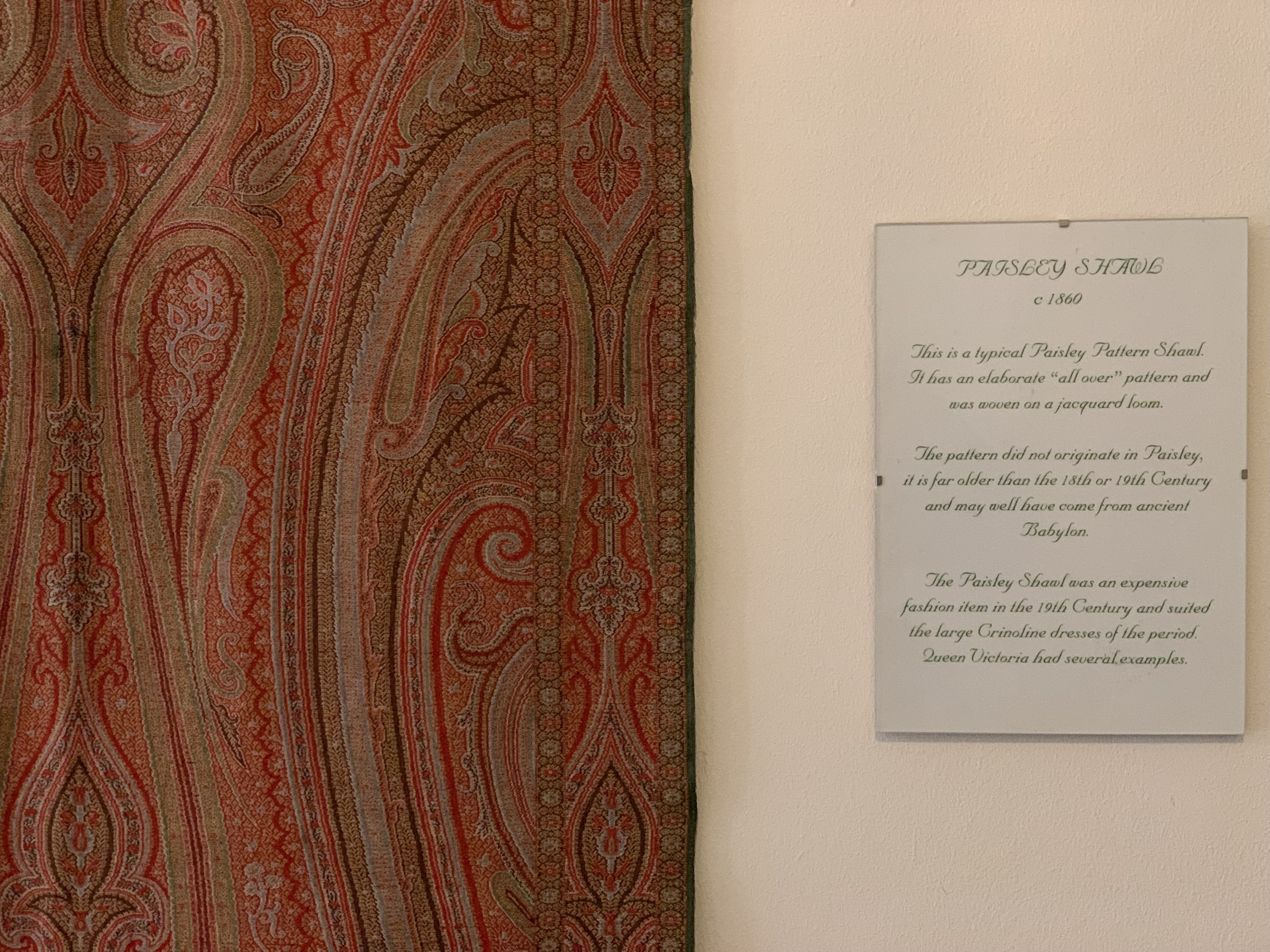
Inside the town hall we met Philippa Ordnung, one of Philipp’s colleagues, who had the key to the iconic tower. She took us up the twisting wooden stairs, past the bells of the town clock, to a balcony with the best view in Fürth.
On descending the tower I was handed back to Philipp Abel and said goodbye and thank you to Andrea for her interesting tour.
Philipp, Philippa and I walked back through the pretty cobbled streets to Welthaus, Fürth’s centre for fair trade. (Finally fair trade, I hear you say!) There are a number of fair trade organisations operating out of the Welthaus. Downstairs is Weltladen Fürth, the fair trade shop, and also FARCAP, their fair trade fashion store. Upstairs, is the home of Eine Welt-Station Fürth, a fair trade education centre, with a meeting room that is rented out to local community groups. (To view any of these websites in English click the translate icon on your web browser.)
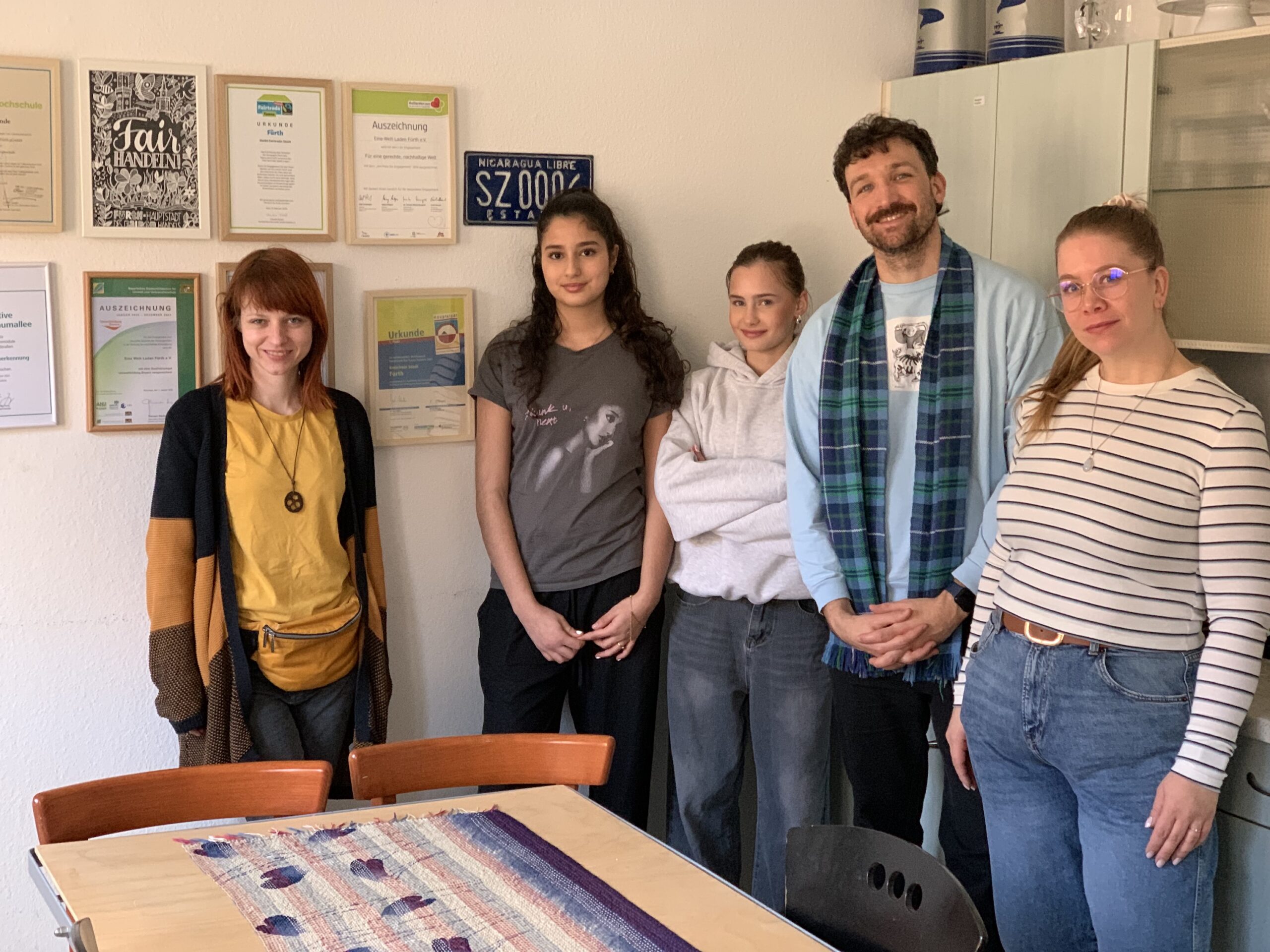
We were welcomed to the centre by Yana Laber, director of Welthaus and head of education. She showed us upstairs to their main room where they hold meetings and training workshops. It’s a big, bright space with a large table running down the middle. Any community group can rent this space and it is used by the Fürth fair trade group and local unions. We poked our heads round the education office, used by Yana, and admired the well organised shelves where each topic appeared to have its own labelled box. Next door was a well equipped kitchen that can also double as a meeting room. There is also another small office rented by one of the local unions.
Back downstairs we were we met by Andreas Schneider, chairman and director of Eine Weltladen, the fair trade shop. The shop has a floor space of about four times the size of Rainbow Turtle’s with an enviable turnover of about €500k.
Andreas has an impressive CV with a theology degree, a career as a social worker, and a campaigner for social justice and fair trade. Yana describes him as their “fairtrade guru” and he has a particular interest in coffee, tea, wine and chocolate, which the shelves of Weltladen attest to. Andreas would be first on my list if I ever organised a party!
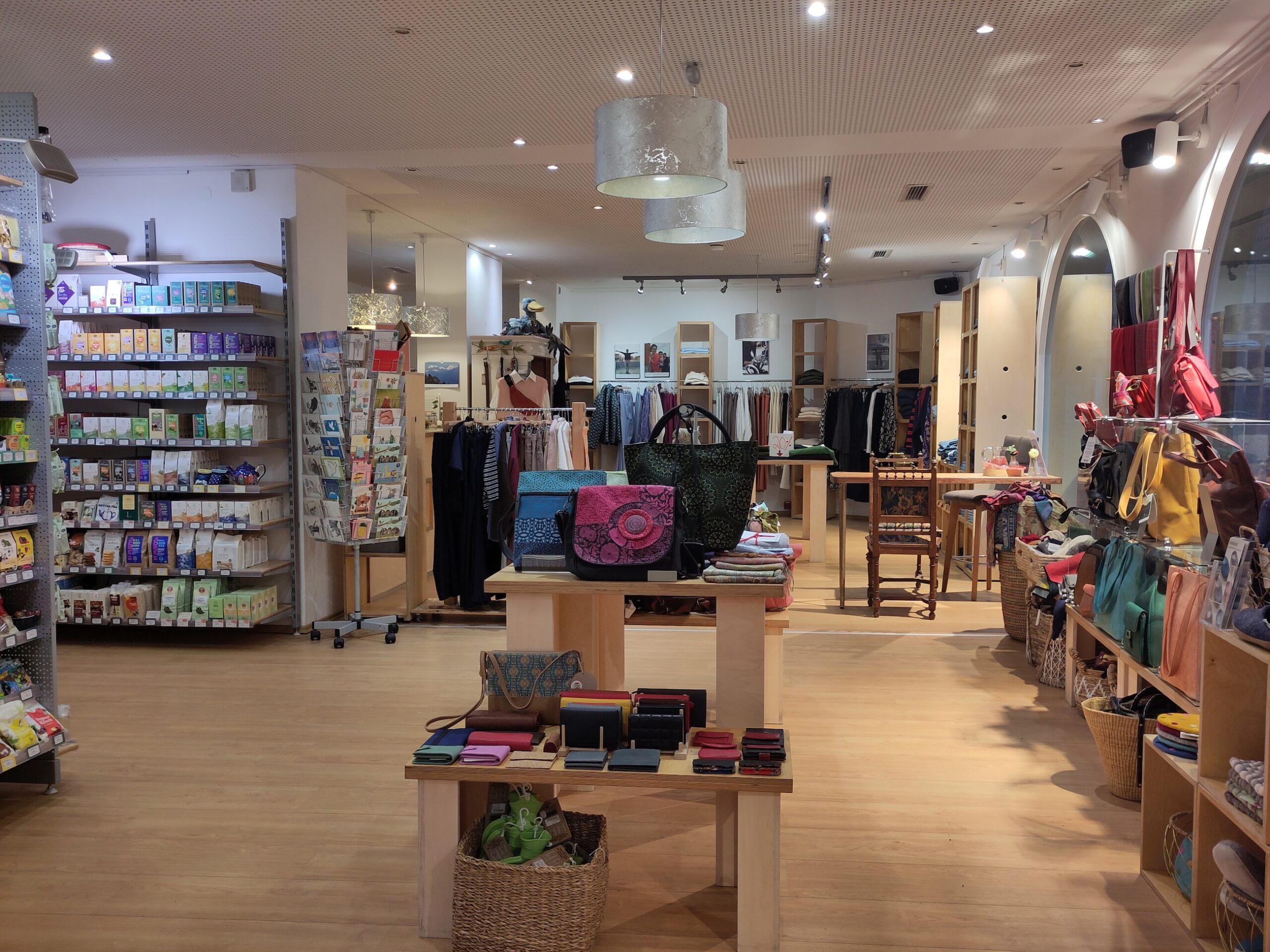
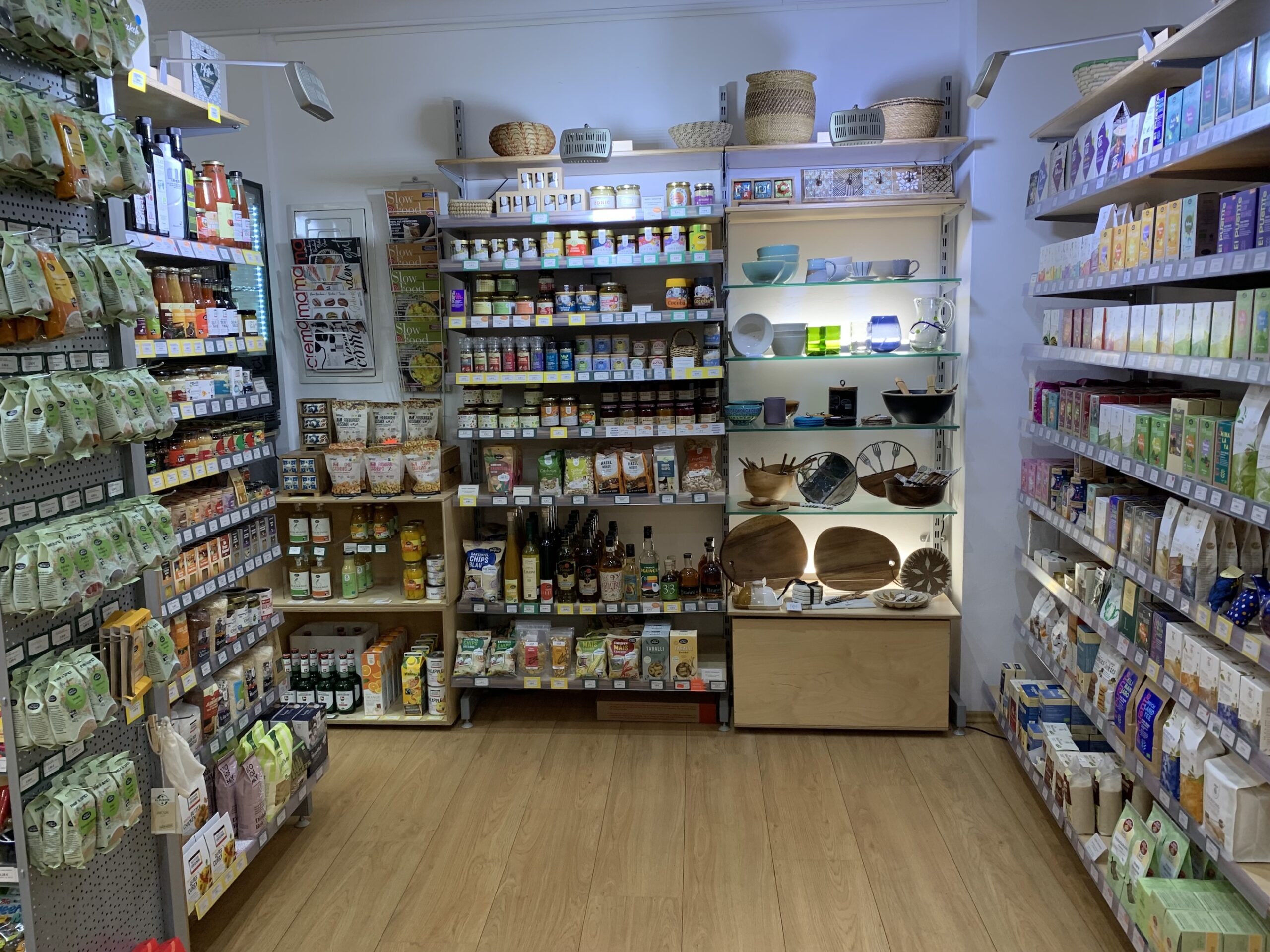
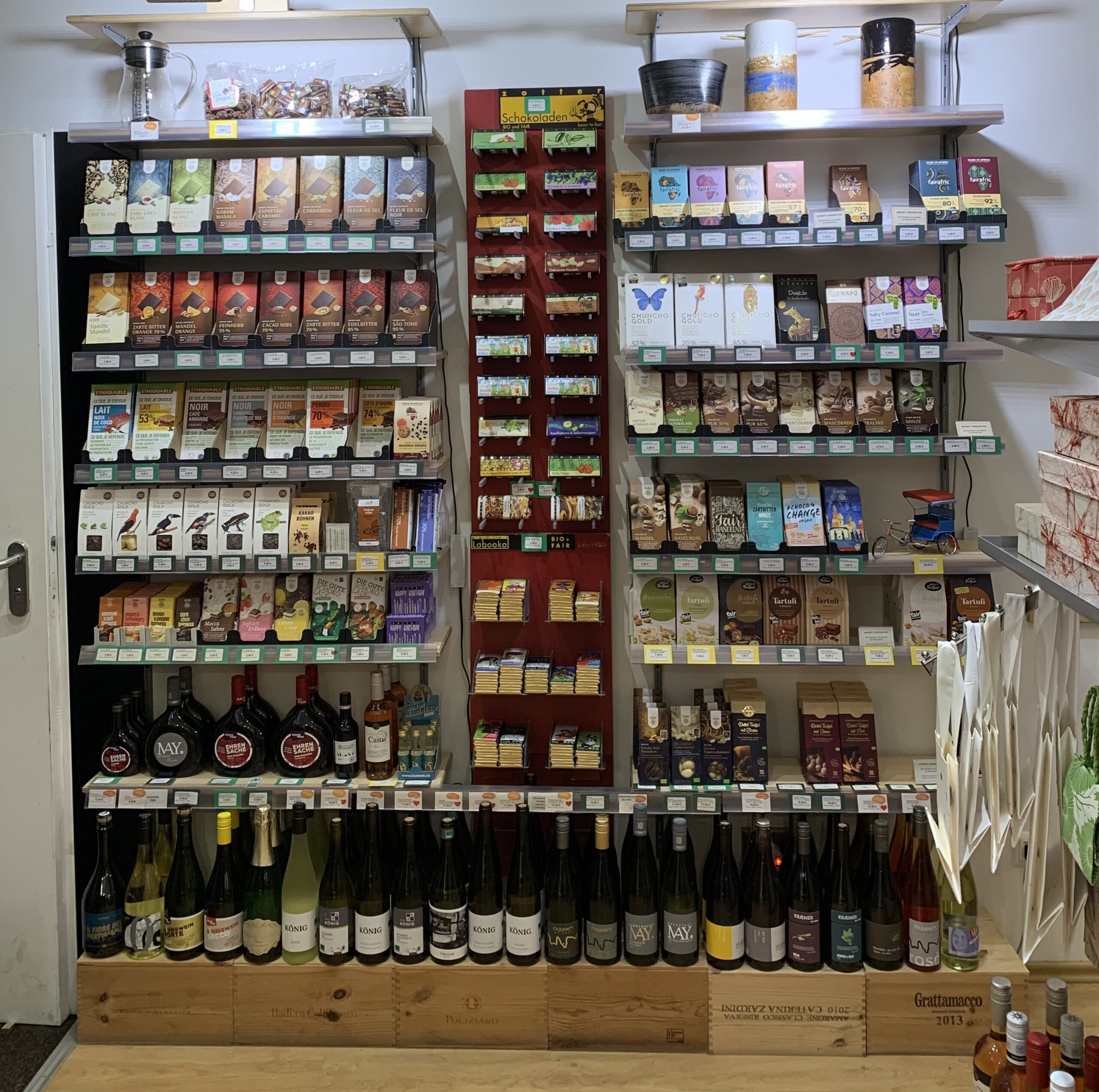
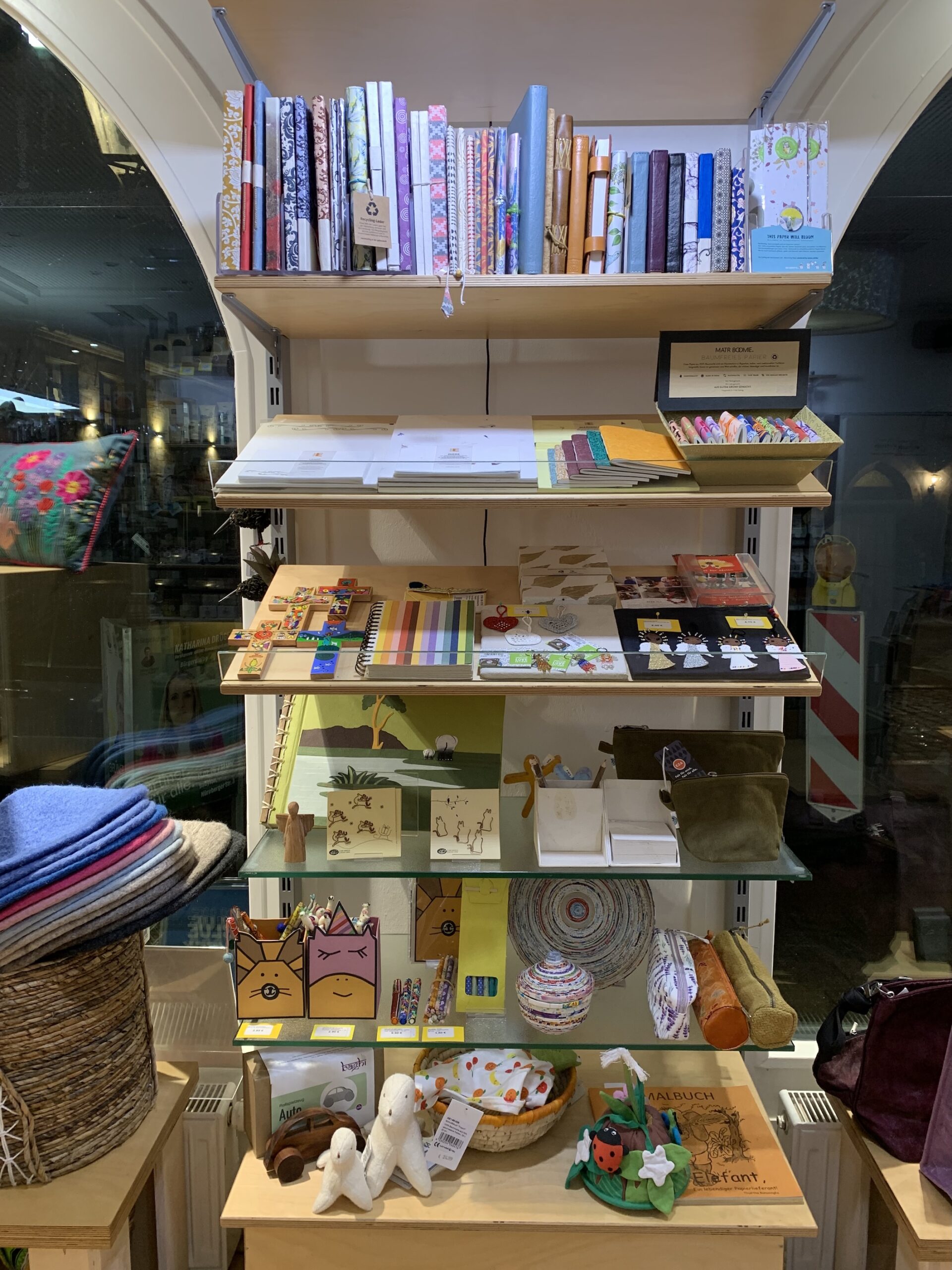
The Weltladen is a beautiful space with an incredible selection of foods, drinks and crafts. Needless to say, my bag was going to be heavier heading home after my shopping spree there. There was so much I would love to have bought but I had travelled with hand luggage allowance only.
Fürth has had a fair trade shop for over 40 years and in 2017 they came together with FARCAP, the fair trade fashion company, to bring everything fair trade under one roof at the Welthaus. They have an impressive selection of women’s and men’s clothing, all brightly displayed. I met Lena Litzinger, who looks after their displays, and she showed me around. They even have a whole section of fair trade jeans.
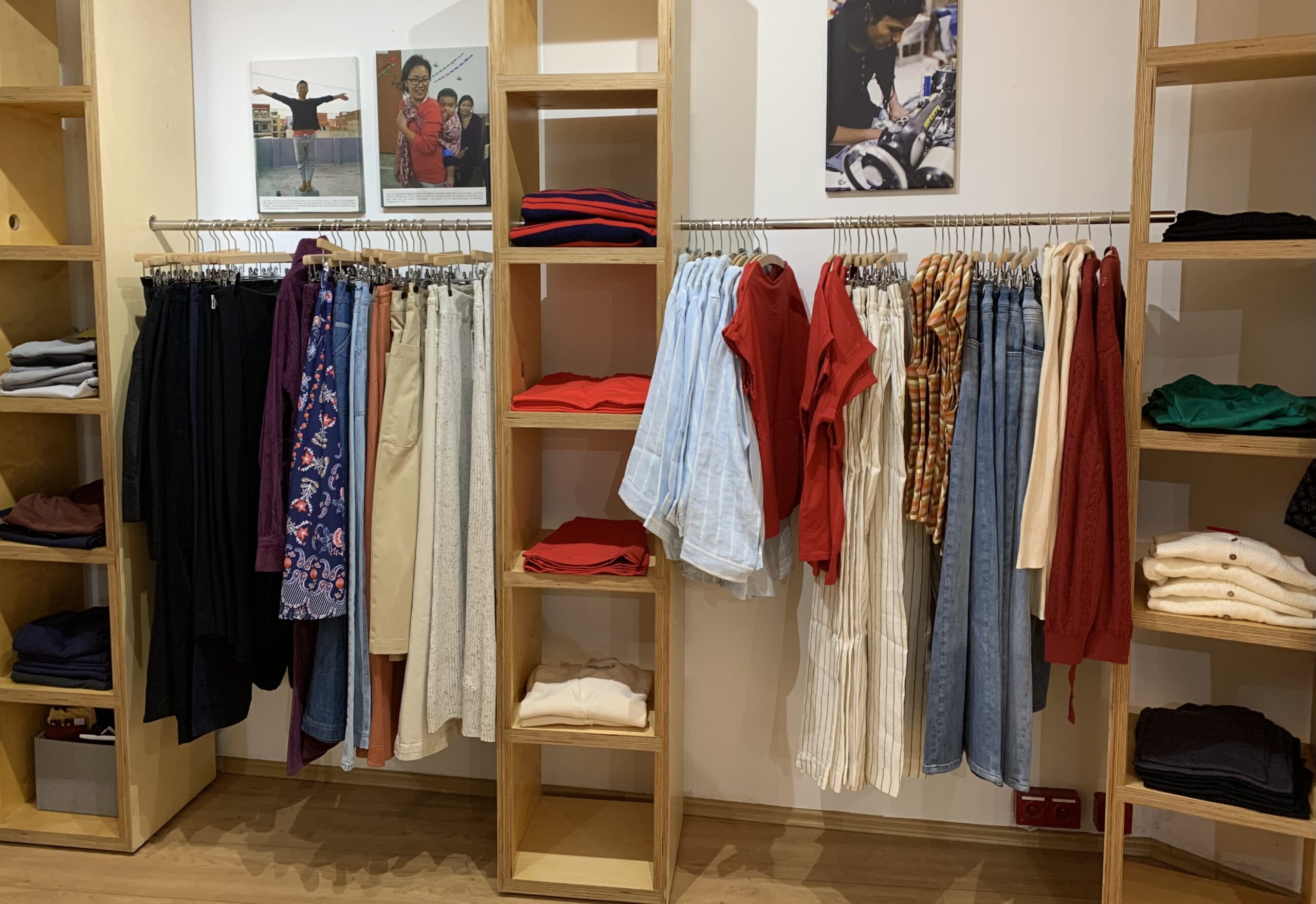
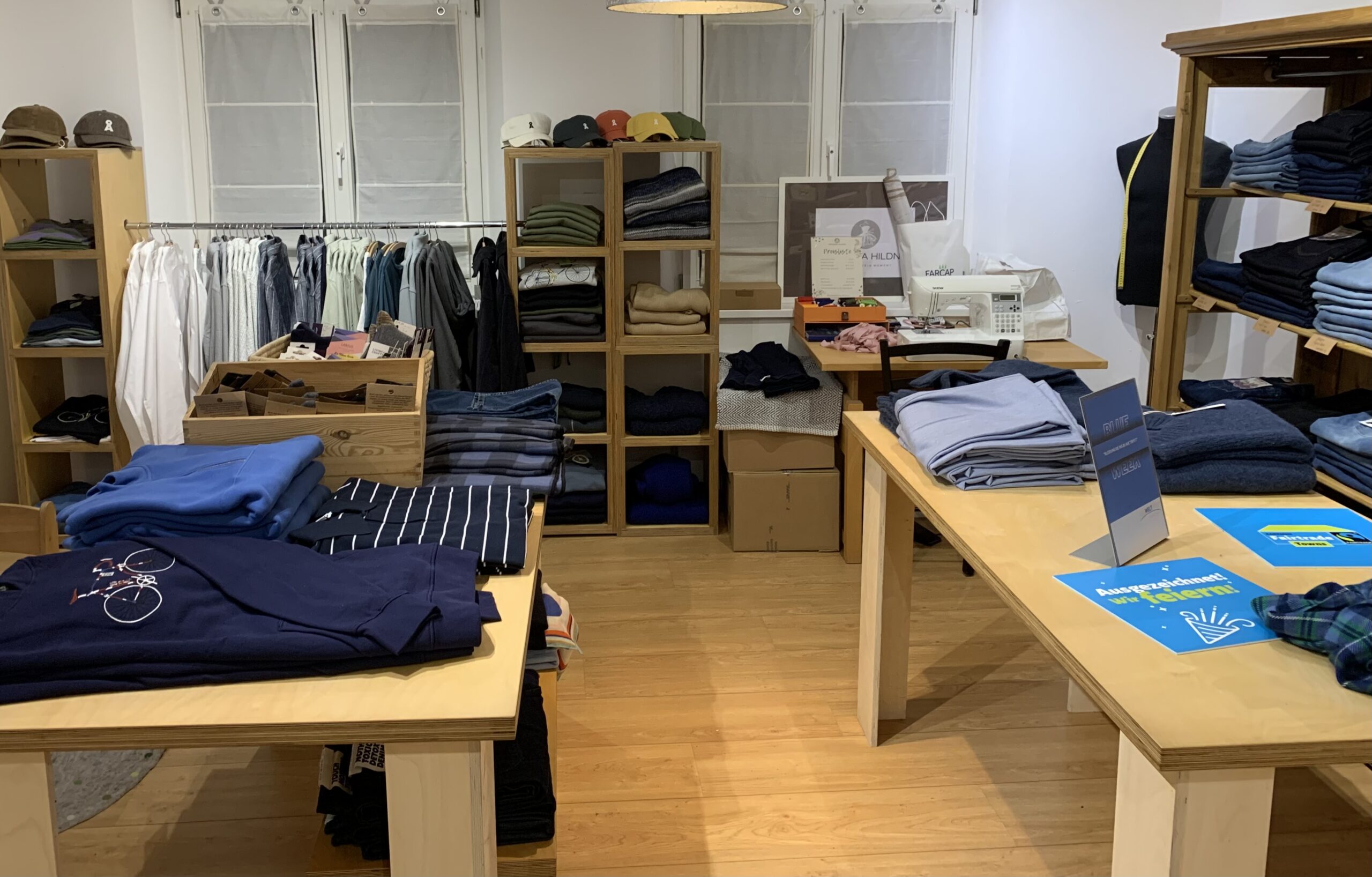
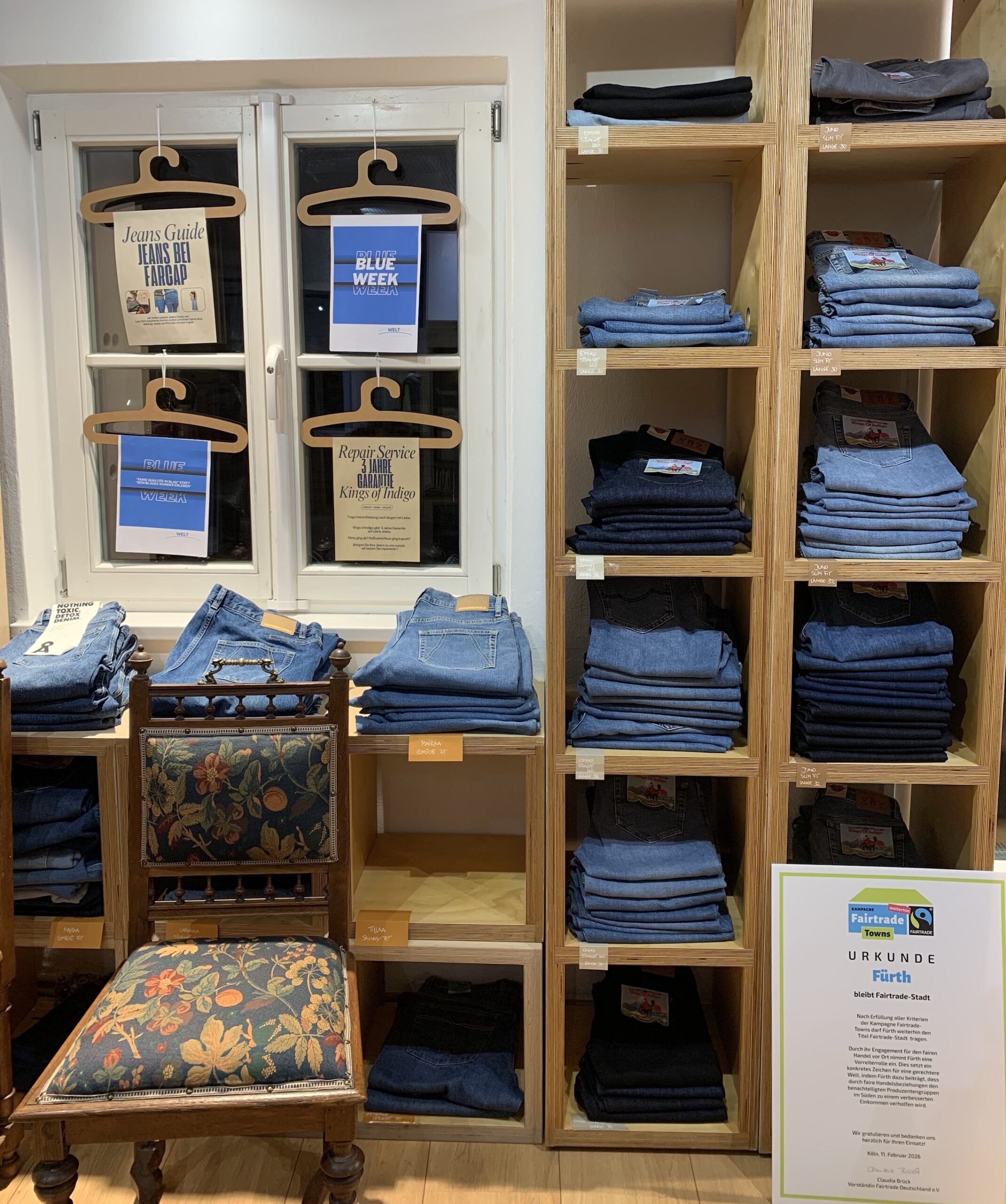
Yana then took us out round the back of the shop into a courtyard where they have raised beds and a greenhouse. During the summer months they grow organic vegetables that they take into schools to show the pupils how they can grow and cook healthy food.
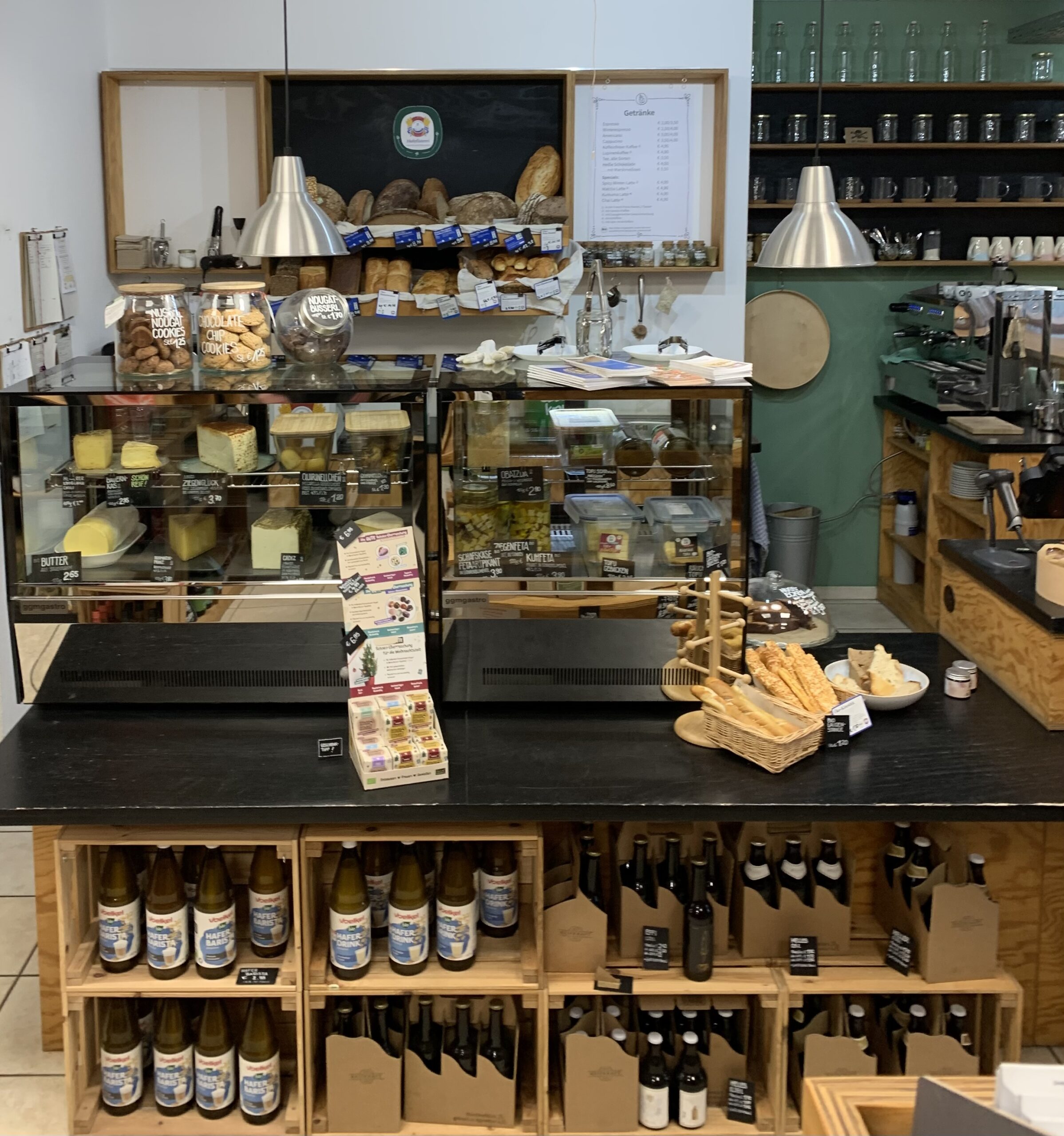
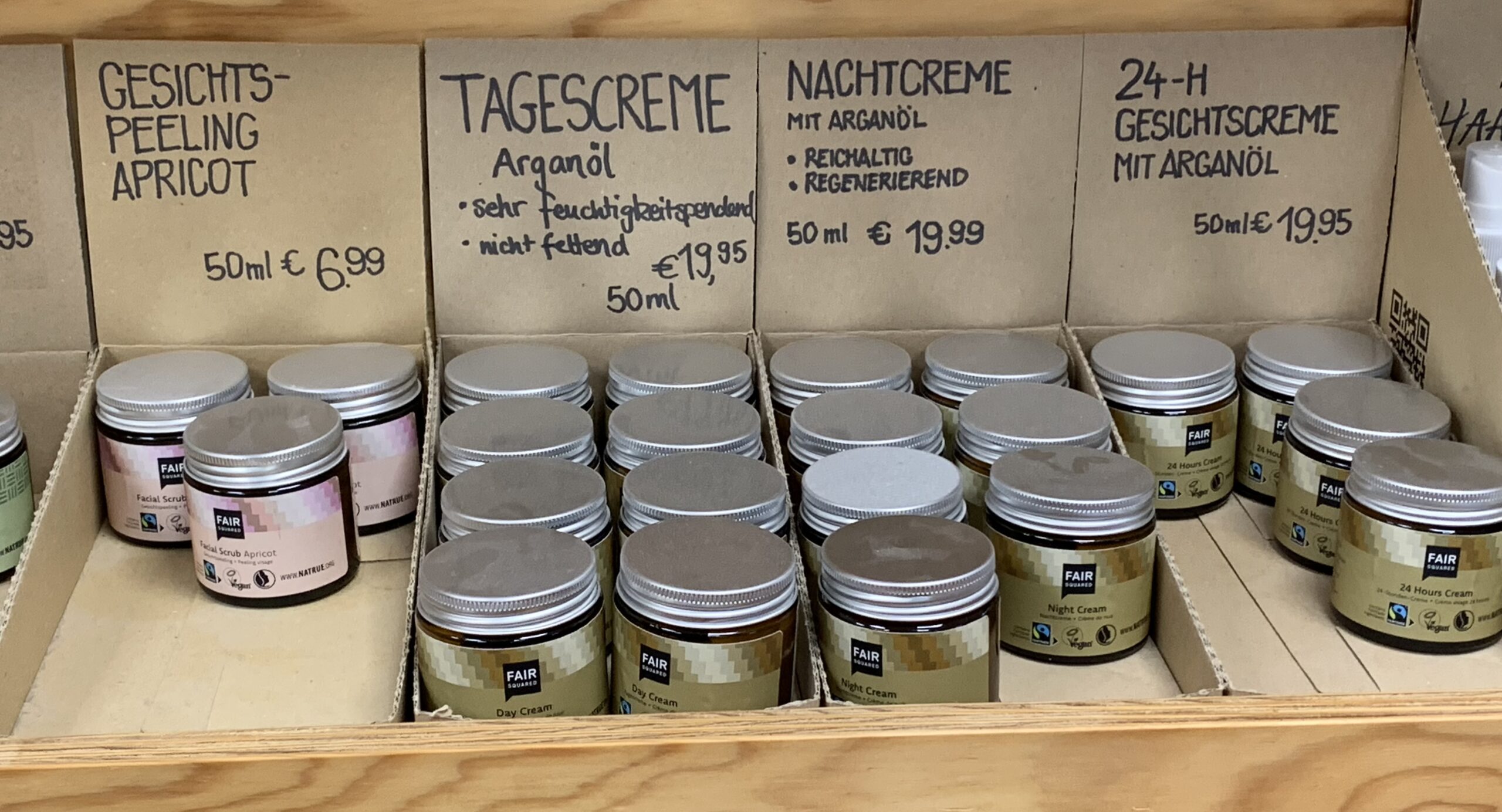
Following lunch, Philipp and I went round the corner to Kleegrün, a zero waste shop, where we were met by its co-founder, Claus Bierling. Claus has a long history of graphic design and brand development. He started Kleegrün with his partner, Claudia Schlagenhaufer, back in 2019, to do his part in tackling the problem of plastic waste. At that time there was a growing interest in zero waste, but a combination of covid and the war in Ukraine has since closed over 160 stores in Germany. Claus and Claudia were determined to keep going and only now are starting to recover from that period.
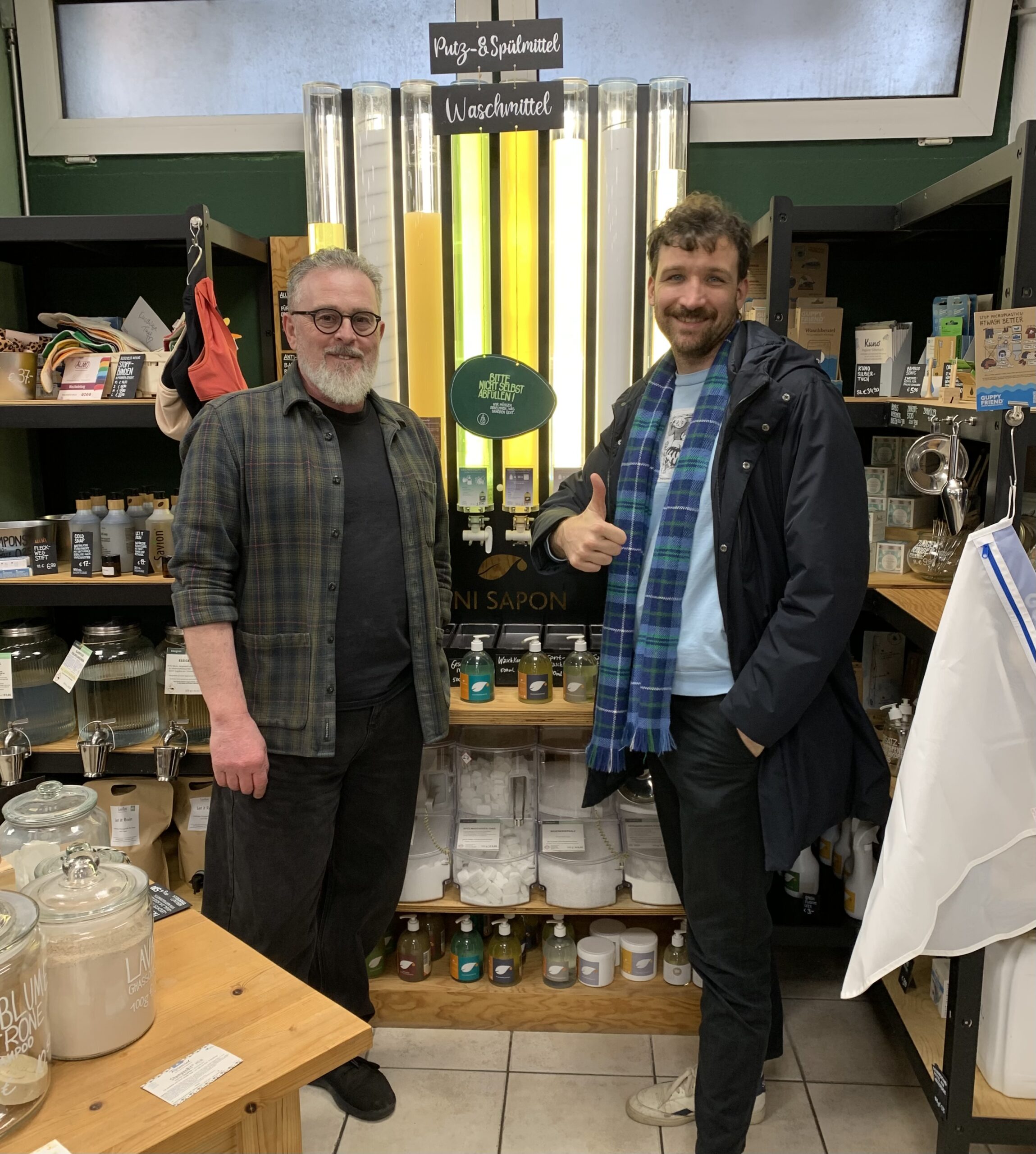
Claus reckons that the shop saves half a tonne of plastics a year with their careful practices. They insist that their suppliers send their products in sustainable containers or packaging. Kleegrün also buys in bulk and decants items such as rice, seeds and nuts into dispensers that the customers can fill their own jars with. In fact there are a whole range of refillable products, from cleaning and beauty products to foods and drinks. Where they are not refillable you can return your empties to the shop and they will send them back to the manufacturer for cleaning or recycling.
My first full day in Fürth was pretty exhausting and we ended up having an Afghani meal in a quiet restaurant. There we talked football and about our respective teams Greuther Fürth and St. Mirren. Interestingly, Fürth’s colours of green and white stripes, and the logo of a shamrock, are not unlike one of St. Mirren’s local rivals from Glasgow.
Philipp also has an interest in French football and talked about a small French team that he followed, called Red Star FC of Paris, that was founded in 1897 by Jules Rimet (yes, that one of the Rimet world cup). The team developed a reputation as a left wing club, due to its location in the working class neighbourhood of Saint-Ouen, a suburb of Paris. In the period leading up to the 2nd world war the club attracted communists from various parts of Europe, escaping the rise in fascism. One of their most notable players was Rino Della Negra, the son of Italian parents, who was a communist and worked in a local factory. When Germany invaded France he refused to do forced labour for them and joined the French resistance. He carried out a number of guerrilla attacks before being caught and executed in 1944. Before he died, at the age of 20, he famously sent a letter to his younger brother, ending it with, “Your big brother, who still loves you.”
Wednesday 11th. Anniversary day.
Today’s the big day when, 10 years ago, Fürth was declared a fair trade city. At 11am we have a press conference at the Welthaus where we will meet the mayor of Fürth, Dr. Thomas Jung. Then in the evening there will a formal reception at the Welthaus to commemorate the anniversary.
Philipp meets me a bit later this morning as he still has his job to do at the Council and for his union, where he is a local leader. We go to a local café/bakery for breakfast, where there is the usual tea sketch. Since I left home, in fact even at Glasgow airport, I have not been able to get a decent cup of tea. All the cafés seem to think that tea is a cup of hot water (sometimes warm) with a tea bag on the side. Any tea drinker knows that boiling water should be poured onto the leaves to allow the tea to infuse properly. I get really irritated that so much care is paid to the making of coffee, fortunes are spent on fancy machinery, and staff are trained as baristas. We tea drinkers are the poor cousins who regularly get overlooked! (Rant over.)
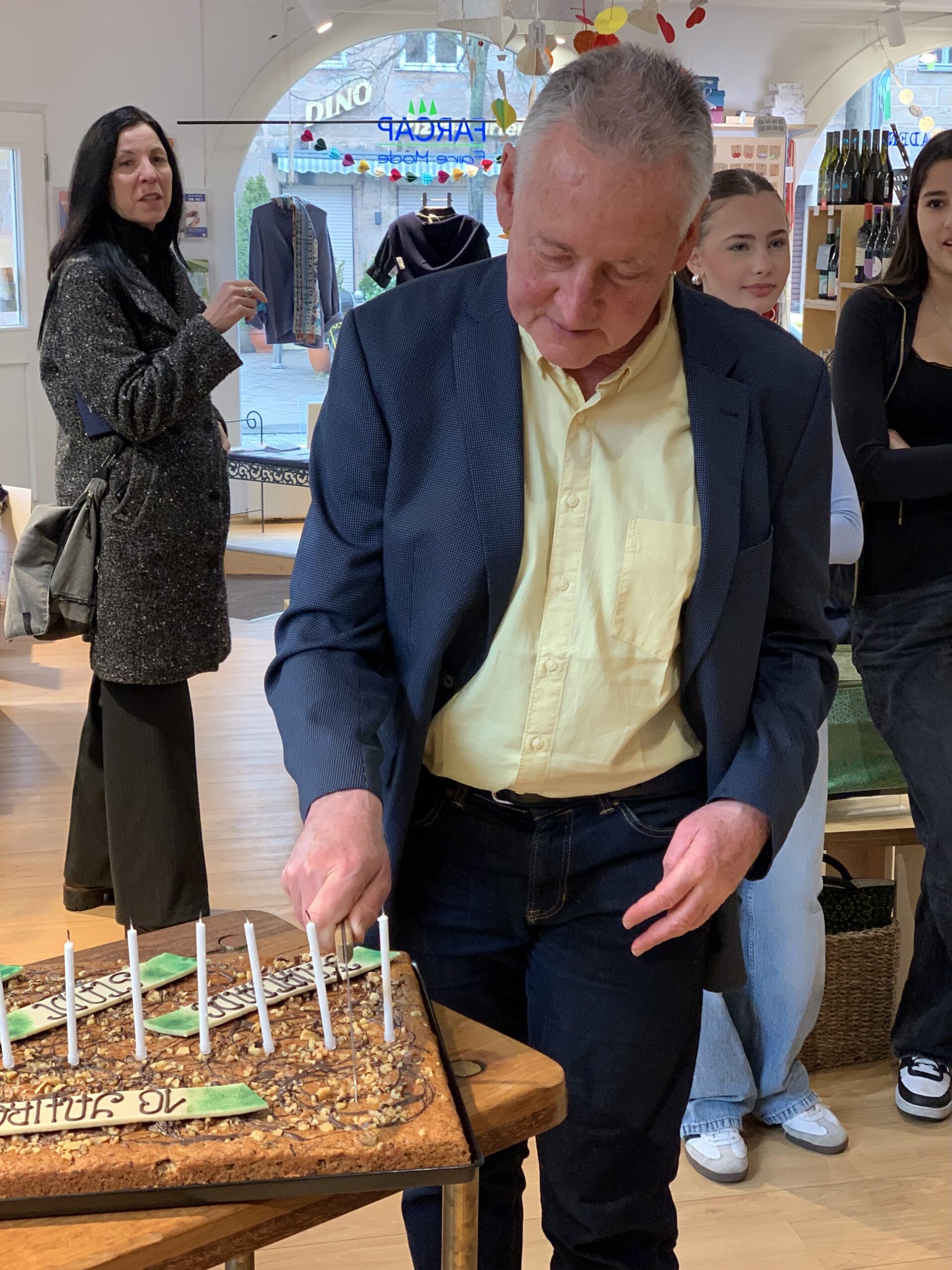
The Weltladen, or fair trade shop, is a hive of industry when we arrive there. We help to put up some banners and set up an area for the anniversary cake (made with fair trade ingredients). At 11am the mayor arrives with the Council press officer, Claudia Wunder. A few short speeches are made and the Mayor cuts the cake.
Talking with Andreas Schneider I learn that Germany has its own fair trade label, Transfair e.V., where it can be awarded to products made in Germany as well as from the global south. Some of the wine sold in the shop, that is produced from local vineyards, carries that label.
Philipp and I then walk back to his office to pick up the pool car that we’ll need for the afternoon. First stop is the Tucher brewery, where we’re invited to join dignitaries from Fürth City Council and Renfrewshire Council for lunch. They are joining in with the German carnival celebrations and are marking the anniversary of the witch trials in Fürth and Paisley. The founder of the brewery gives us a short history of the business in Fürth (in fact it is on the border of Fürth and Nuremberg so that they can claim it is sited in both cities). Needless to say, the food is excellent, and I have to sample more of their Grüne beer. Philipp has their alcohol free equivalent, which amazingly tastes like real beer! Apparently, alcohol free beer is very popular in Germany. The process involves the chilling of the beer just as the fermentation process starts. This keeps the flavour but prevents the creation of alcohol. After the meal I talk with our Provost, Lorraine Cameron and councillor Lisa-Marie Hughes. They are keen to support the twinned relationship between Paisley and Fürth, and like me, have funded the trip themselves. I also talked with the Provost’s PA, Donna Gallagher, who I’d been emailing about our respective visits. It’s a peculiarity of our modern world that we can communicate with someone without seeing them, and then to meet up in another country.
Philipp then drives us out of Fürth to neighbouring Cadolzburg to visit local fair trade supplier, CaWeLa (pronounced Kah-vay-lah). We meet director Frank Braun who shows us round their beautiful warehouse. Inside the walls are covered in wood and are insulated to reduce heating costs. It is also lined with red carpets and dotted with tall green plants which soften space so it doesn’t appear like a traditional warehouse.
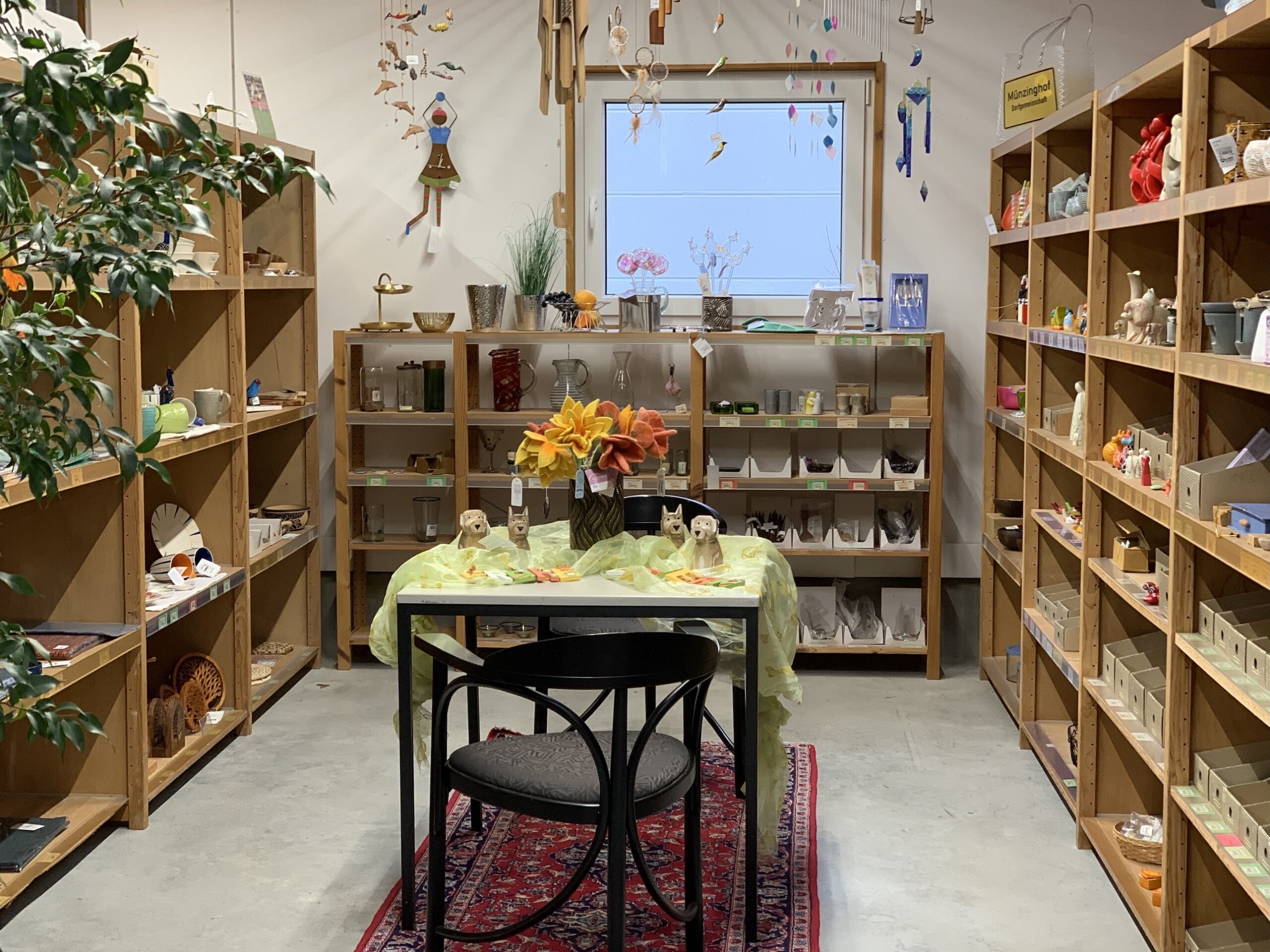
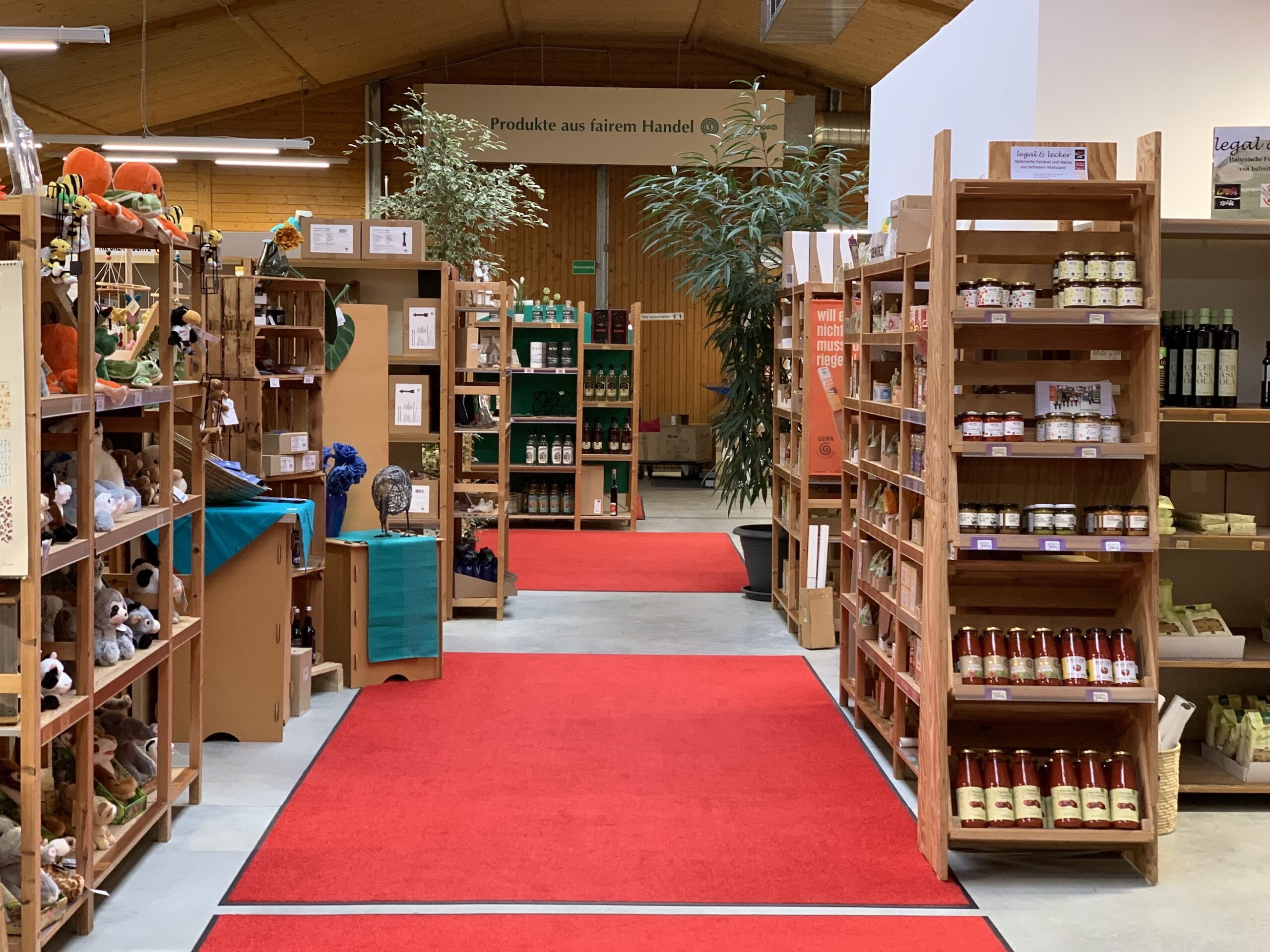
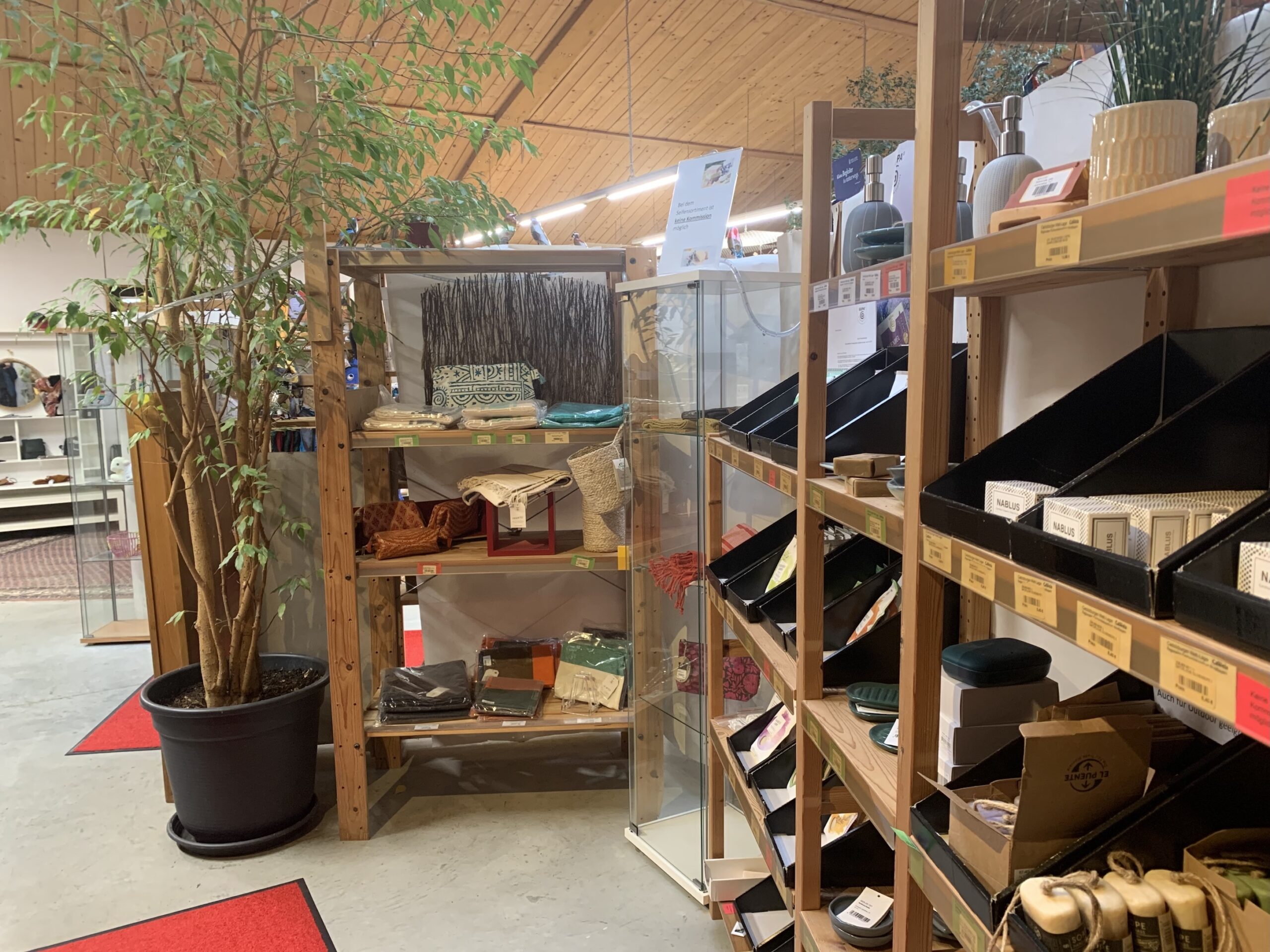
CaWeLa, short for Cadolzburg Welt-Lager (lager means store), started out in 1991 with the idea to distribute and sell fair trade products to the many fair trade shops across Germany. Cadolzburg was chosen due to its central location and its proximity to the high density of fair trade shops in the area. Education is important to CaWeLa and their space offers the capability for training people in fair trade and with their products. We talked about areas of overlap with Paisley’s fair trade supplier, True Origin, and how they can learn from each other. Frank also said that he had a son working in Orkney that he was visiting in May, so maybe we would have an opportunity to meet up in Paisley.
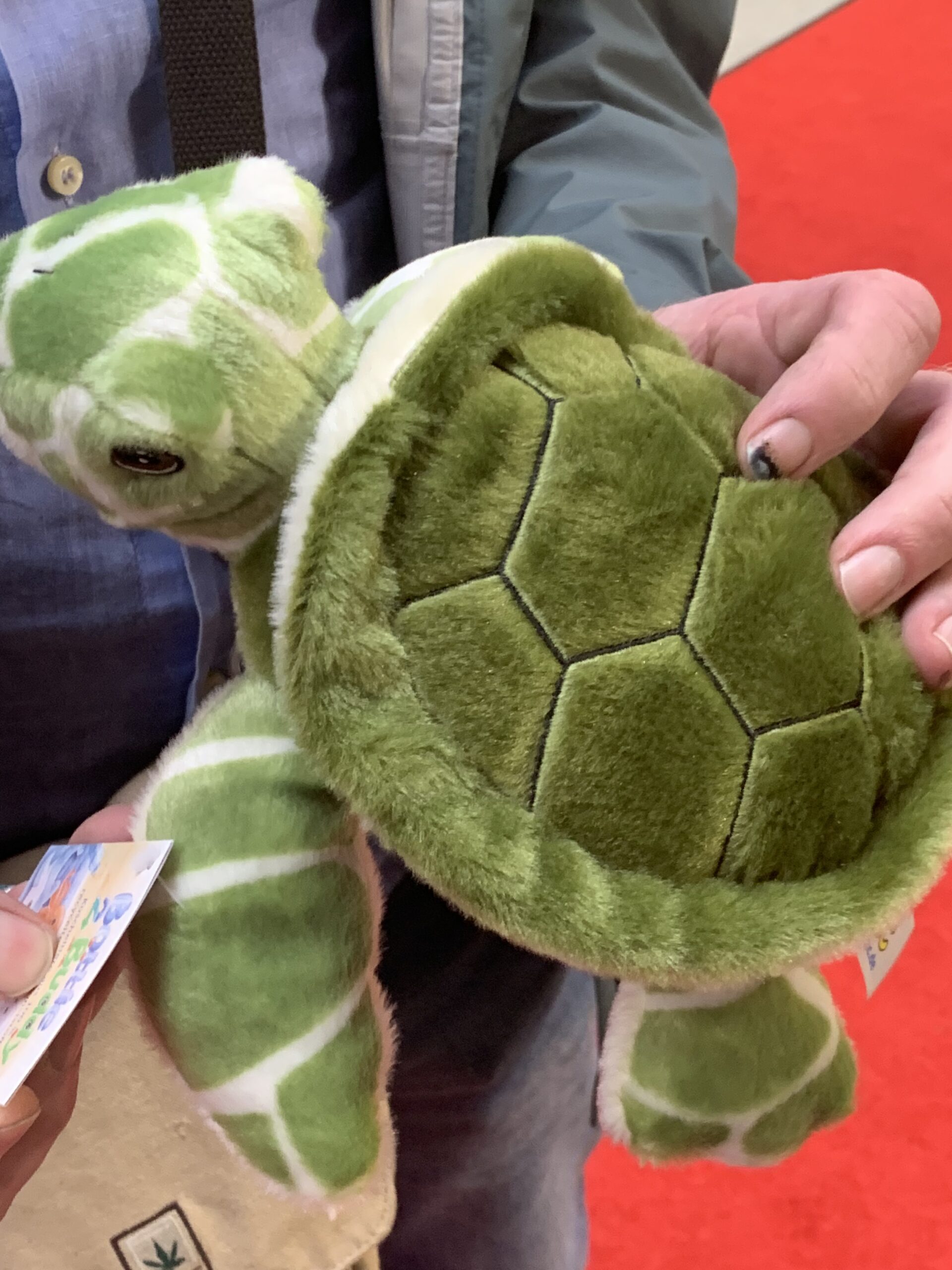
Frank showed me their cuddly toys made from recycled plastic bottles. If you ordered enough (say over 30), the manufacturer would customise them to your needs. CaWeLa stocked a particularly attractive turtle that we mused could be made in rainbow colours. As a parting gift, Frank kindly gave me one of their green cuddly turtles for our shop in Paisley that I named Fürty.
From Cadolzburg we drove back to Fürth and dropped the car back at the car park. We went to Philipp’s office to pick up display boards and banners to put up in the fair trade shop for the evening’s celebration. There I meet Sebastian Kobylak, one of Philipp’s colleagues. He is a researcher in the department and a self taught chocolate sommelier. What he does not know about chocolate is not worth knowing.
Philipp, Philippa, Sebastian and I walk back to Welthaus, pulling a trolley full of display material behind us. When we get there the shop is buzzing with staff and volunteers preparing for the evening’s fair trade celebrations. They had a number of wooden display stands made by Woody Display that are reusable and where you can change the banner.
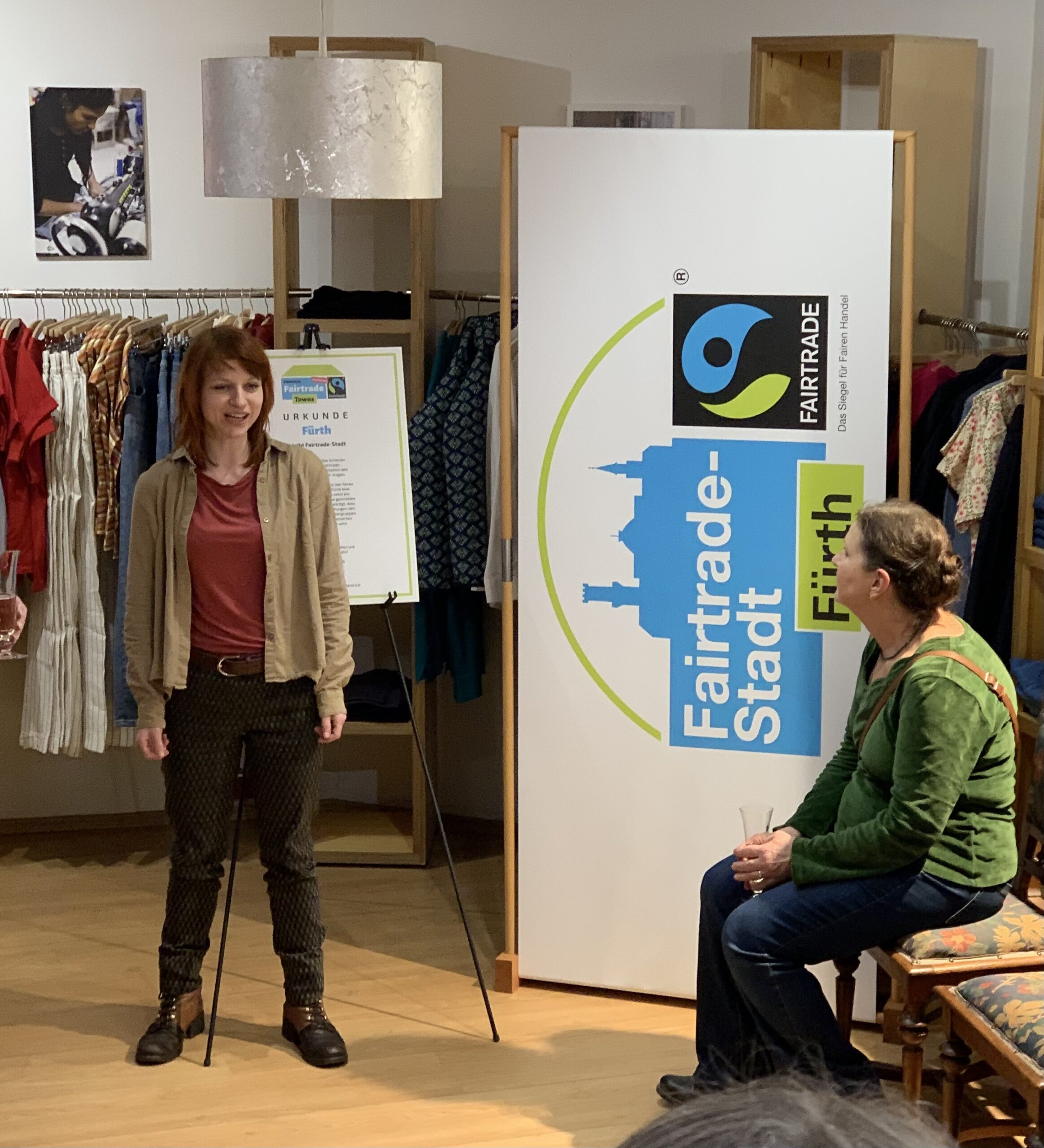
As 7pm approached, more and more people came into the shop to join in with the celebrations. Andreas was on the wine stall handing out glasses of fair trade wine and fizz. Someone else took round plates of fair trade canapès and there also was a table of alcohol free beer from Tucher.
The evening was opened with a speech by Yana Laber of the Welthaus, unfortunately my German wasn’t good enough to understand what she or the others said. This was followed by talks from Andreas and Frank from CaWeLa. Next up was yours truly. I had translated the opening and closing paragraphs into German but the main bulk of it was in English. My main thought was that layering fair trade onto a twinned relationship created something special. Twinning was about building bridges and making connections between towns and cities from different countries. Fair trade was about looking outwards, it was about other, and making the world a fairer place. The final talk was by Philipp Abel, the city’s representative for fair trade
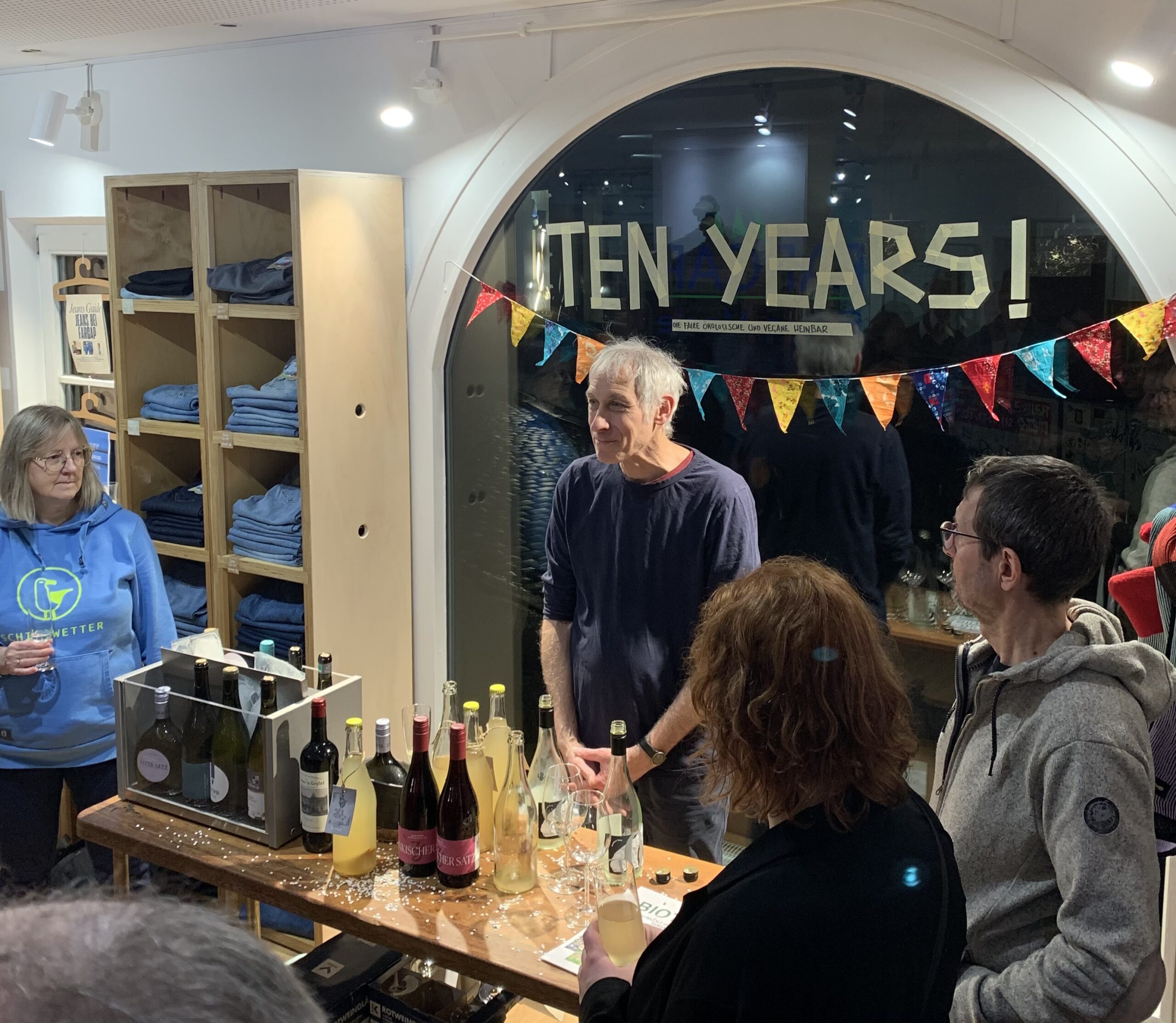
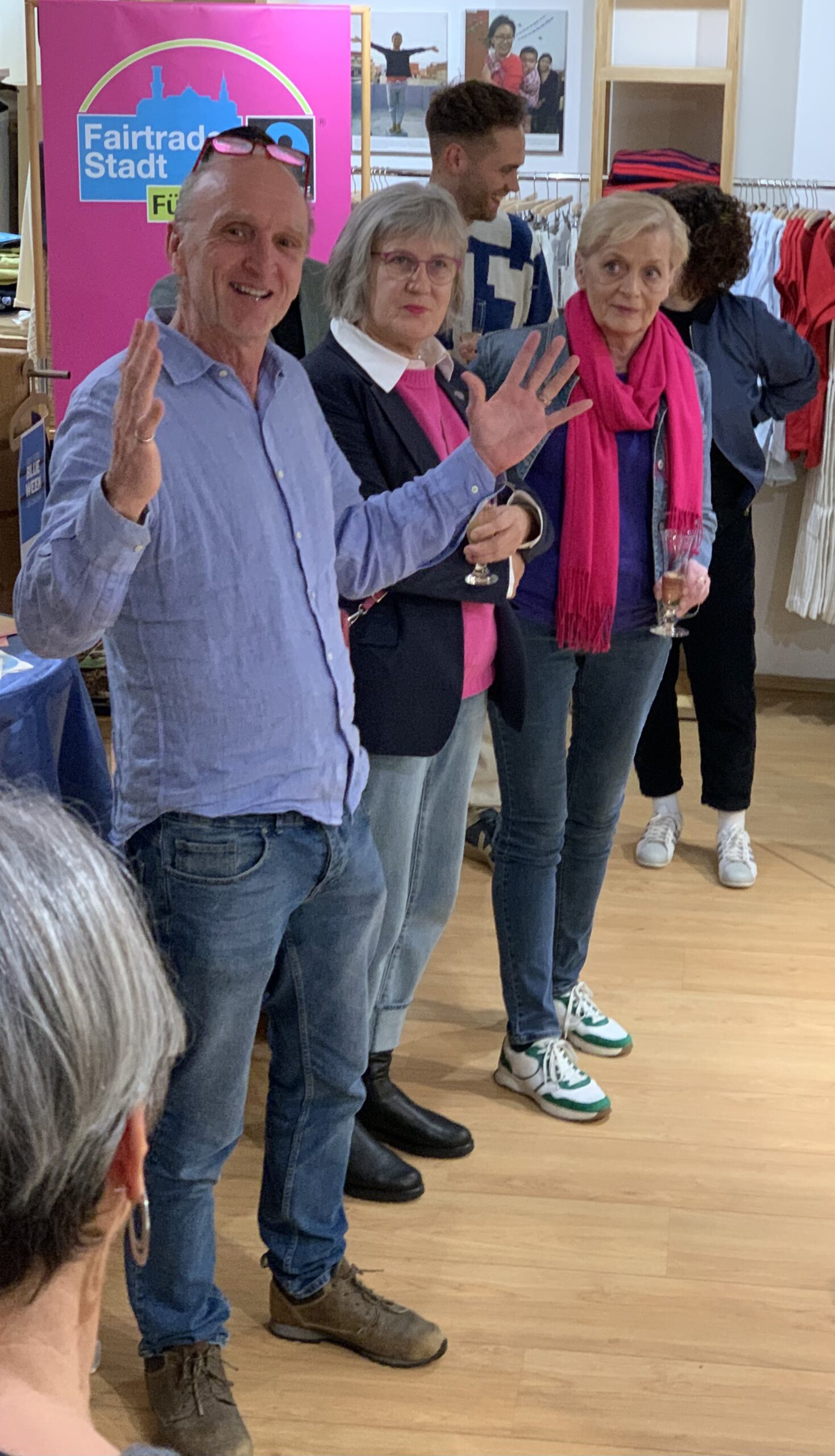
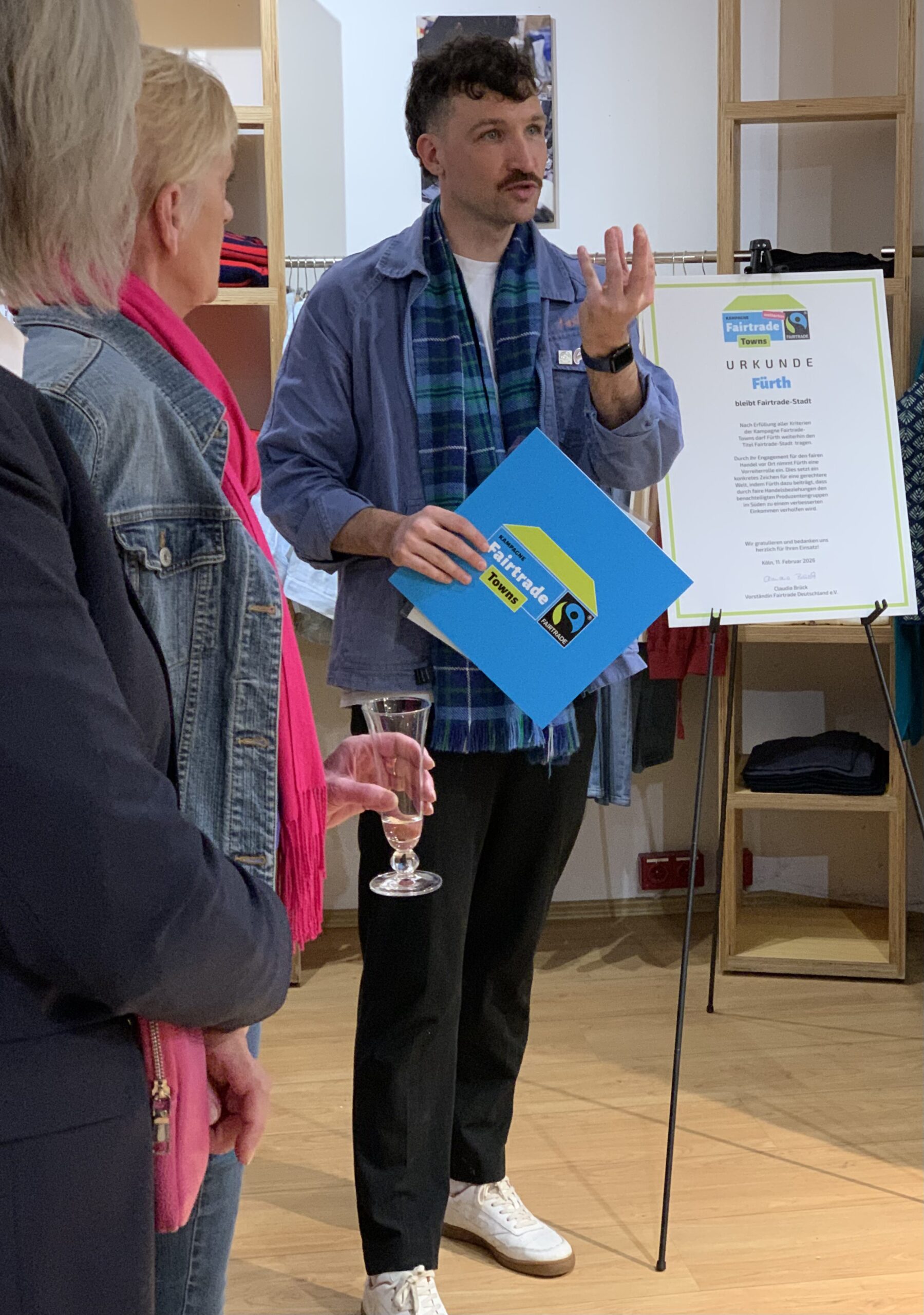
After that the party went into full swing and it was a good opportunity to chat to the people who’d come along. I spoke with Jürgen Hennemann, the mayor of the city of Ebern, who’d driven an hour that evening just to join in with the celebrations. We’d previously met at the Fair Trade Towns’ Conference in Edinburgh. He is a big supporter of fair trade and Ebern has close ties with Fürth.
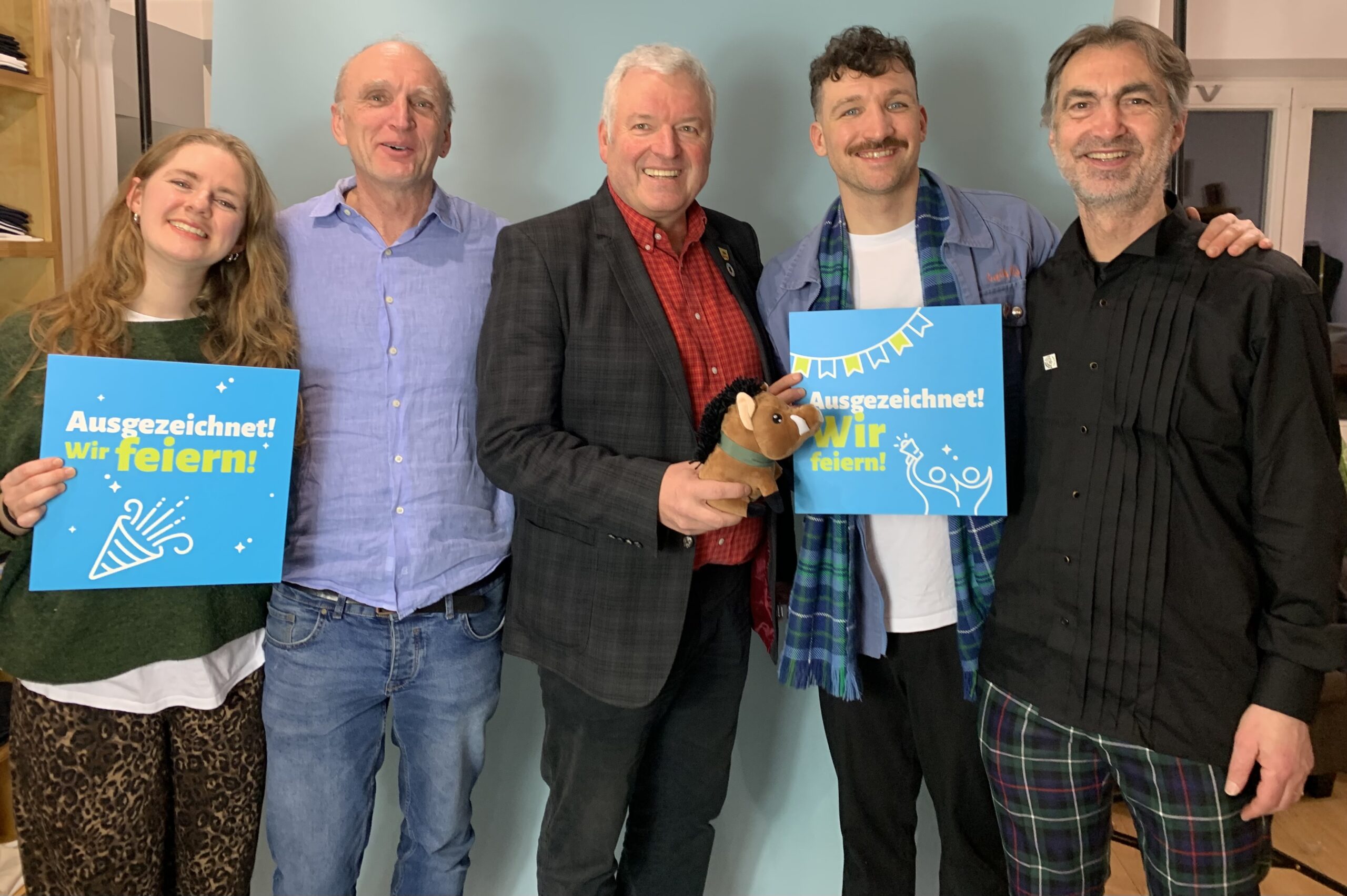
I also talked with Sebastian about his love of chocolate. He showed me round the Weltladen’s extensive selection of chocolate. He talked about the flavours you got from different beans and locations, and he wouldn’t look at anything that had less than 70% chocolate content. He talked about Chuncho in Peru, where it is thought that the original cacao bean came from and has the most complex flavours.
I was pretty tired when I walked back to my hotel that night but my head was full conversations with people who were committed to fair trade and making the world a kinder place.
Thursday 12th
I had an earlier jump today and was meeting Philippa at 9am at the bakery cafe that I’d had breakfast the day before. In my head I had 9am but my body had 9:30am, so I took a longer winding route to the cafe when suddenly my brain and body communicated with each other. Pulling out my phone I realised that Philippa had tried to reach me but the phone had been on silent! 20 minutes late and apologetic I got to the cafe.
The main item on the agenda today was BIOFAC, the world’s largest organic trade fair, that was held in Nuremberg every year. Sebastian had been tasked with looking up all the fair trade suppliers and had come up with extensive list that covered two sides of A4 paper. He met Philippa and me at the subway station, outside the cafe, and we took the half hour train straight to the exhibition centre.
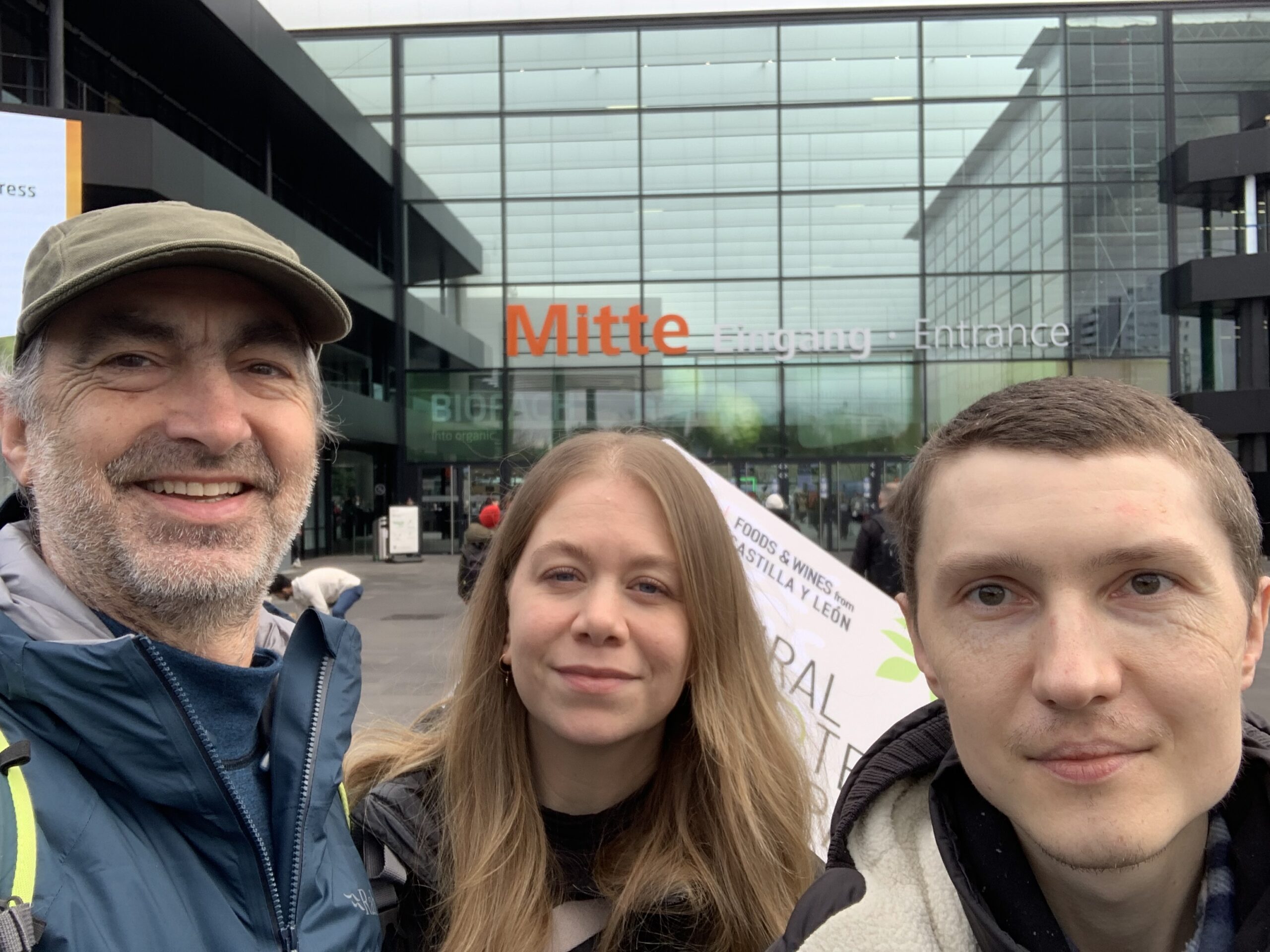
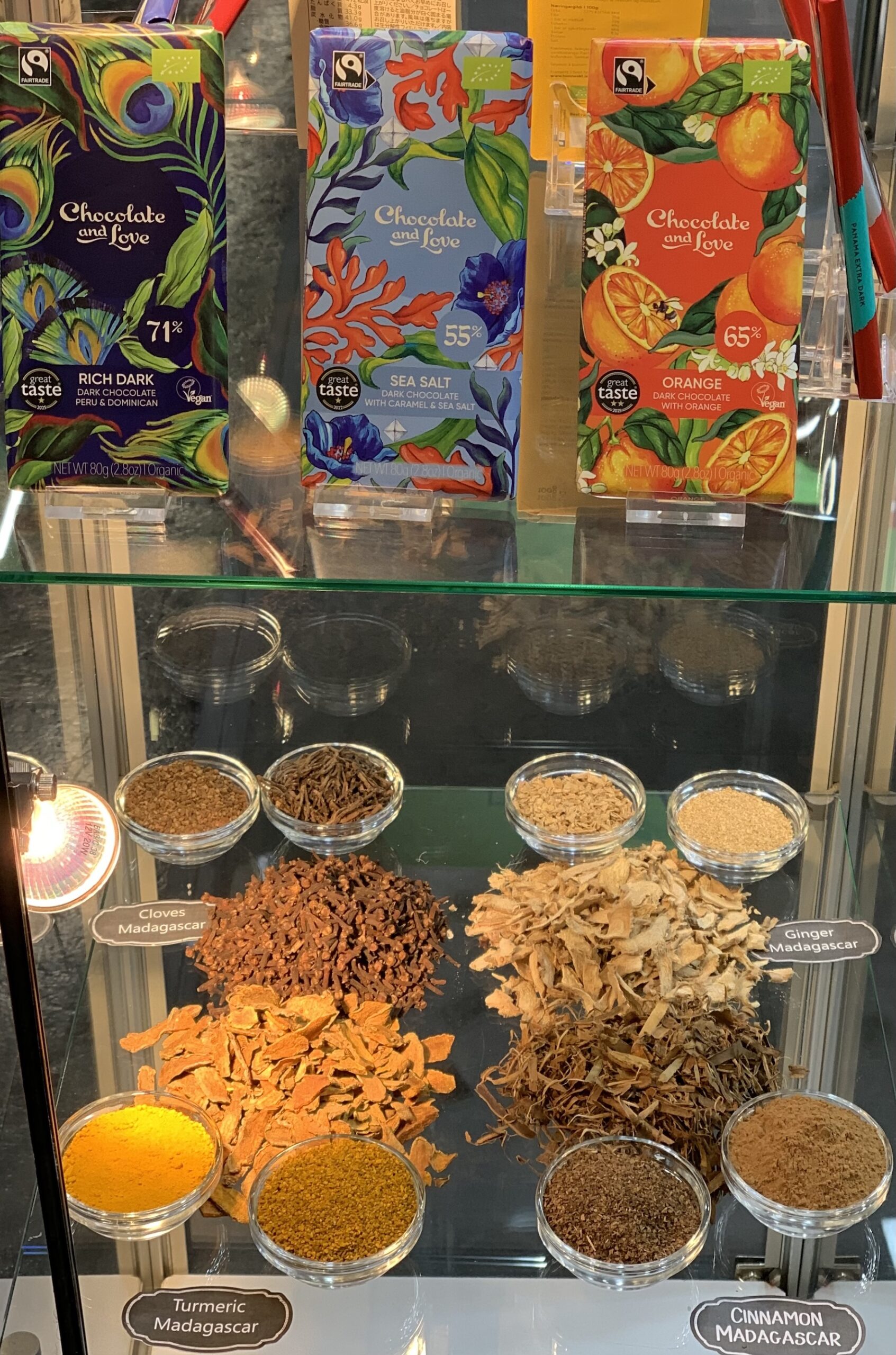
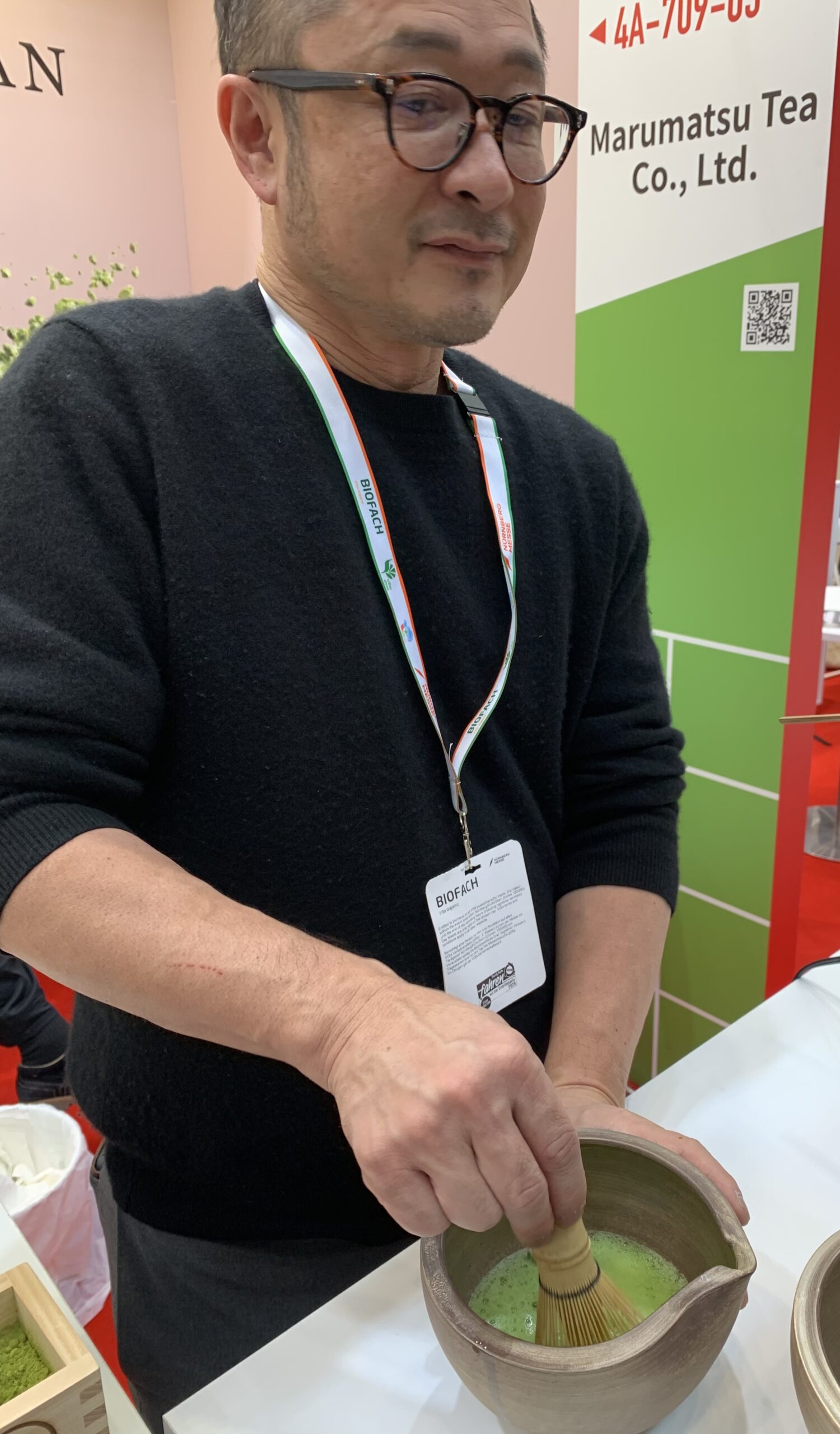
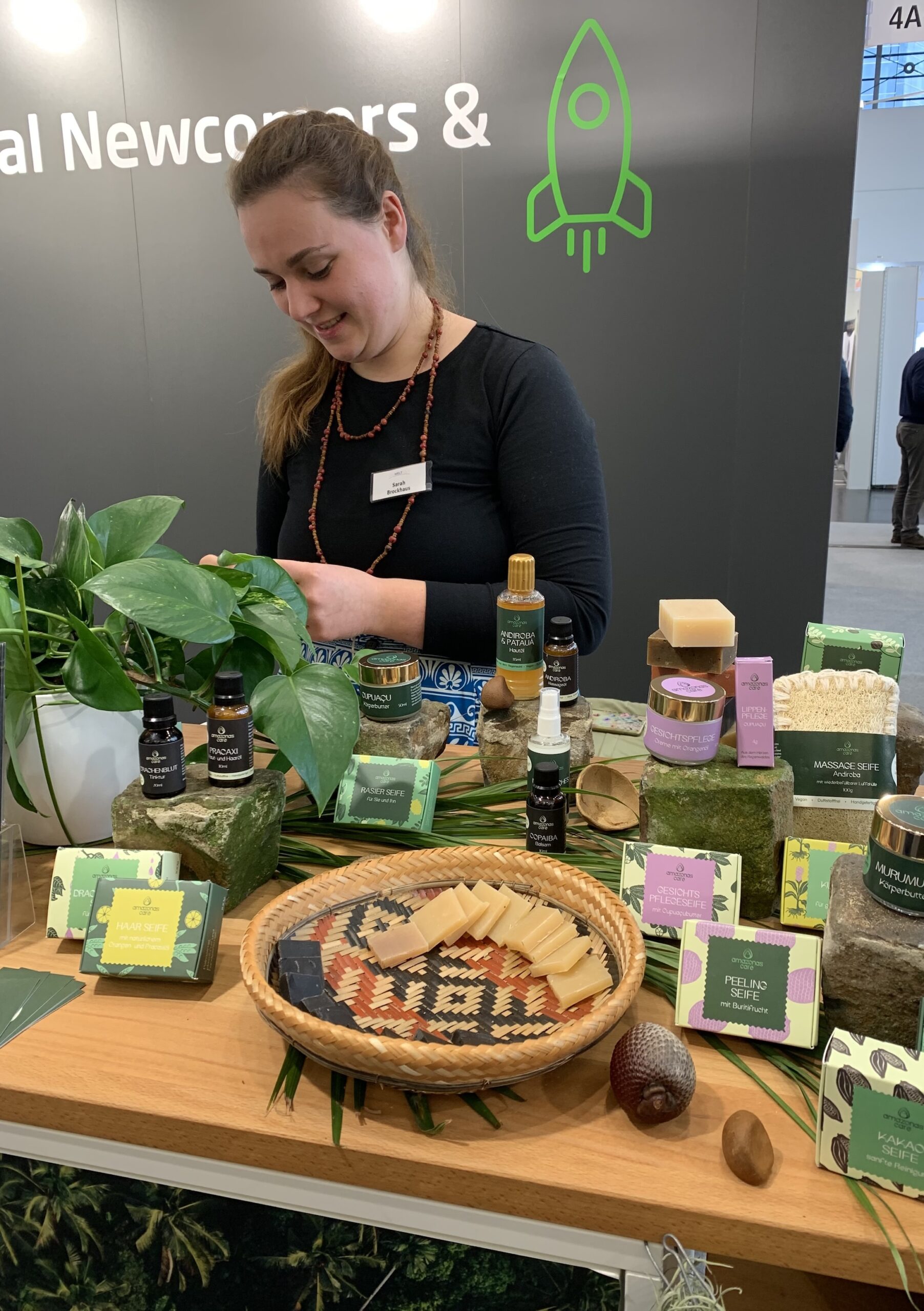
The site has 16 exhibition halls that had been completely taken over by the trade fair. The place was huge and rather overwhelming. There was no way we could make it through Sebastian’s list so decided we’d work our way through some of the earlier halls picking out the fair trade stands and go from there. Needless to say, there were plenty of chocolate stalls that we had to sample their produce at. We came across pottery from Taizé, the spiritual community in France, that I’d visited in the mid-80s. I had my first decent cup of tea, some Japanese matcha, that the server took time over to make. We also visited a stall that used natural ingredients from the Amazon rainforest to make their soaps and oils.

After a few hours wandering around the various halls we were getting hungry. We managed to find some food in one of the German halls (some halls were themed by country) and then got the subway back to Fürth. There we met Philipp, and I said goodbye to Philippa and Sebastian.
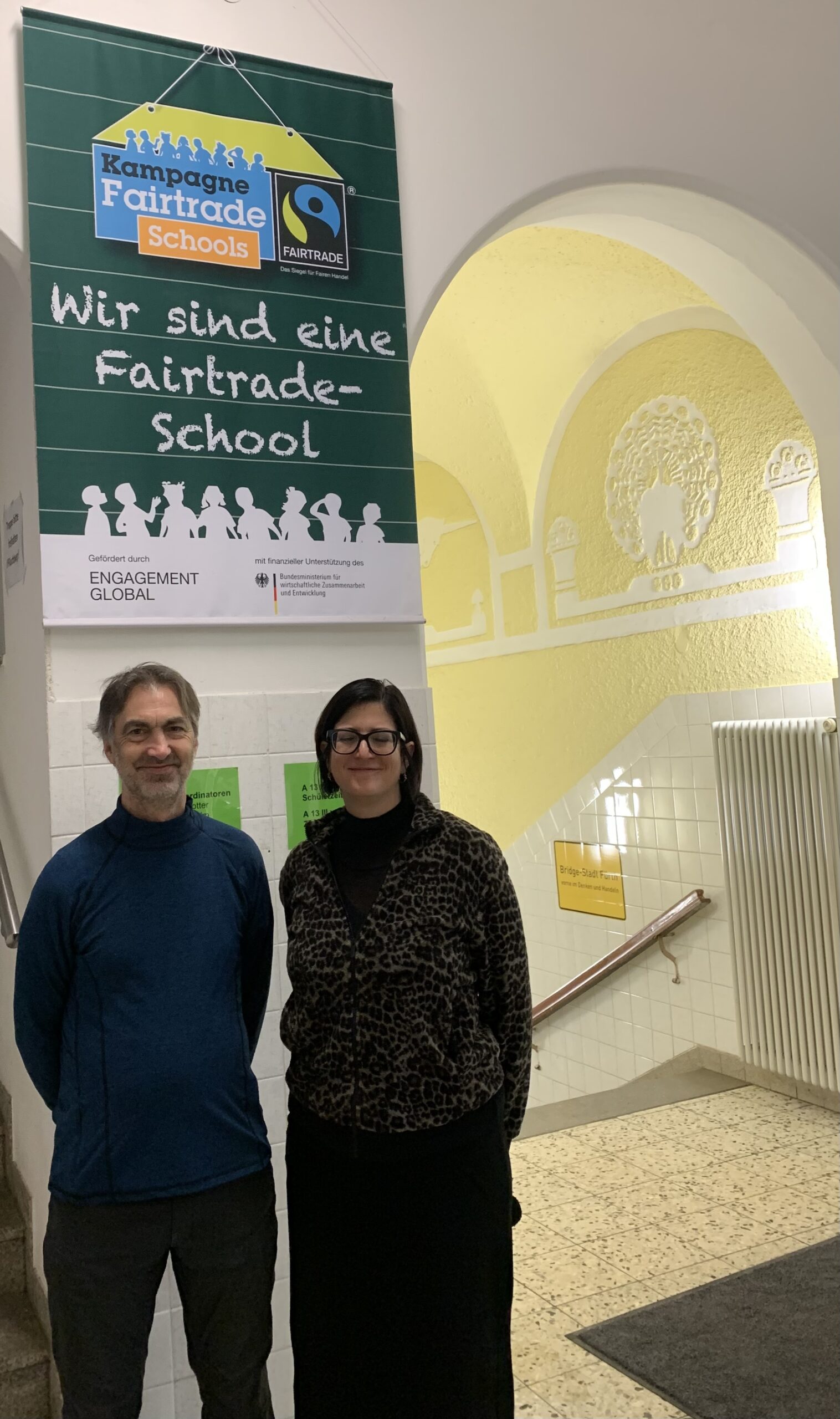
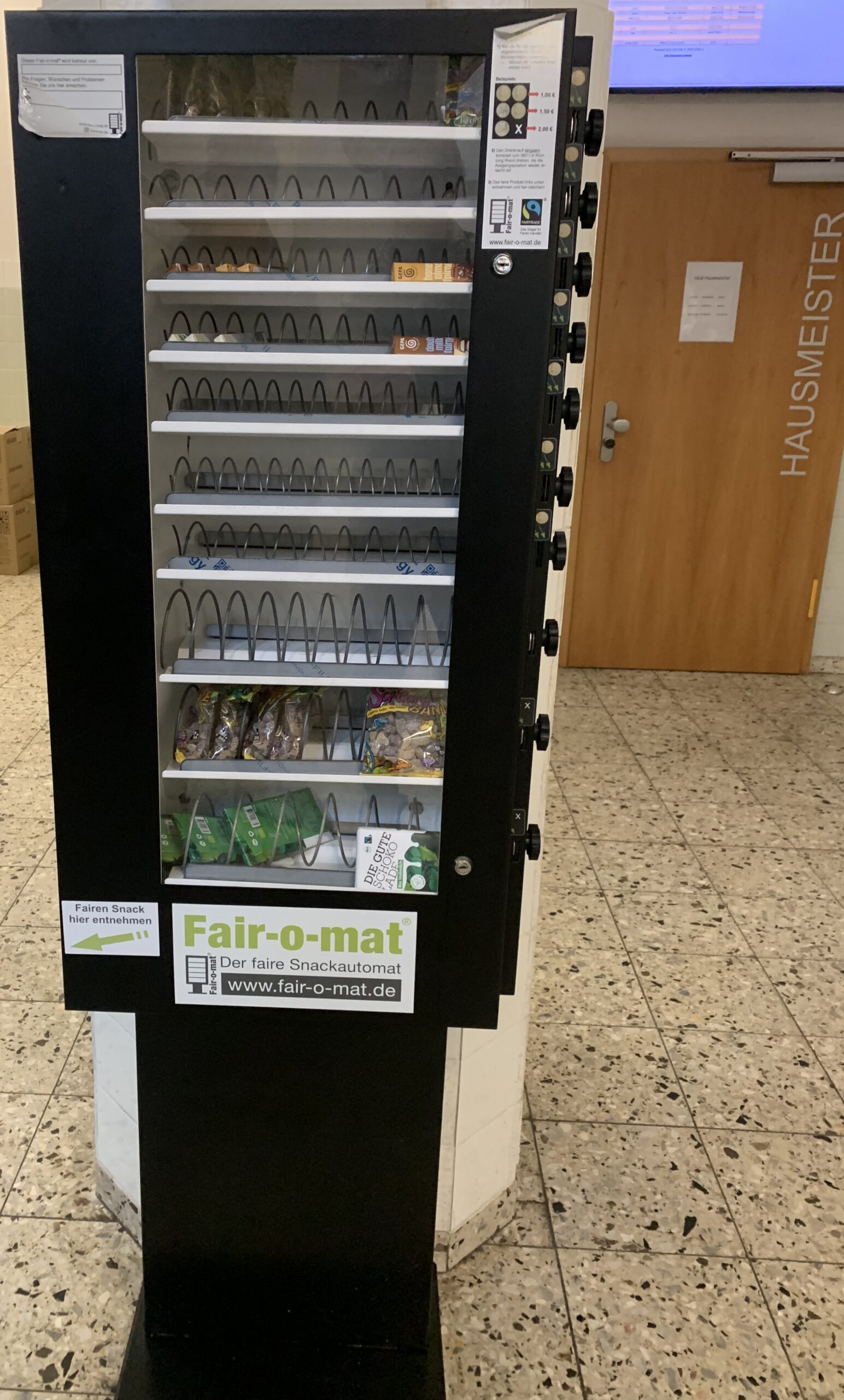
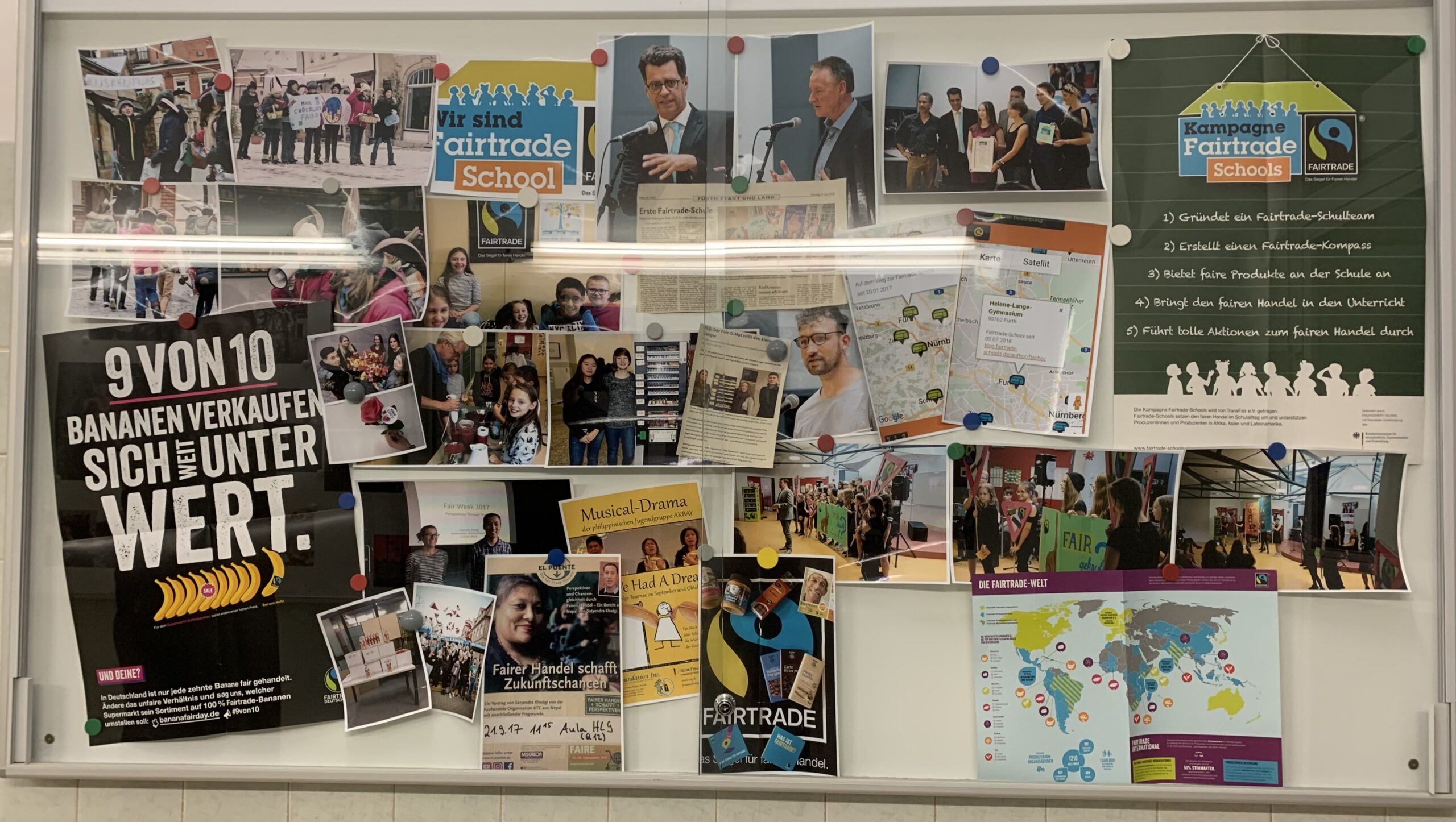
Philipp and I then walked to the Helene Lange Gymnasium in Fürth, their first fair trade school. By now the students had gone home so it was pretty quiet. We were visiting deputy head, Caroline Pauchet-Beissel, who has a background in drama and also responsibility for fair trade in the school. Caroline talked about how they include fair trade across the curriculum, they have put on a number of drama performances highlighting various aspects of fair and unfair trade. The pupils run stalls where they sell fair trade goods. They have even introduced a fair trade vending machine that sells fair trade confectionery using a refurbished machine from Italy.
The school encourages enterprise, and has a pupil run cafe that both students and teachers use.
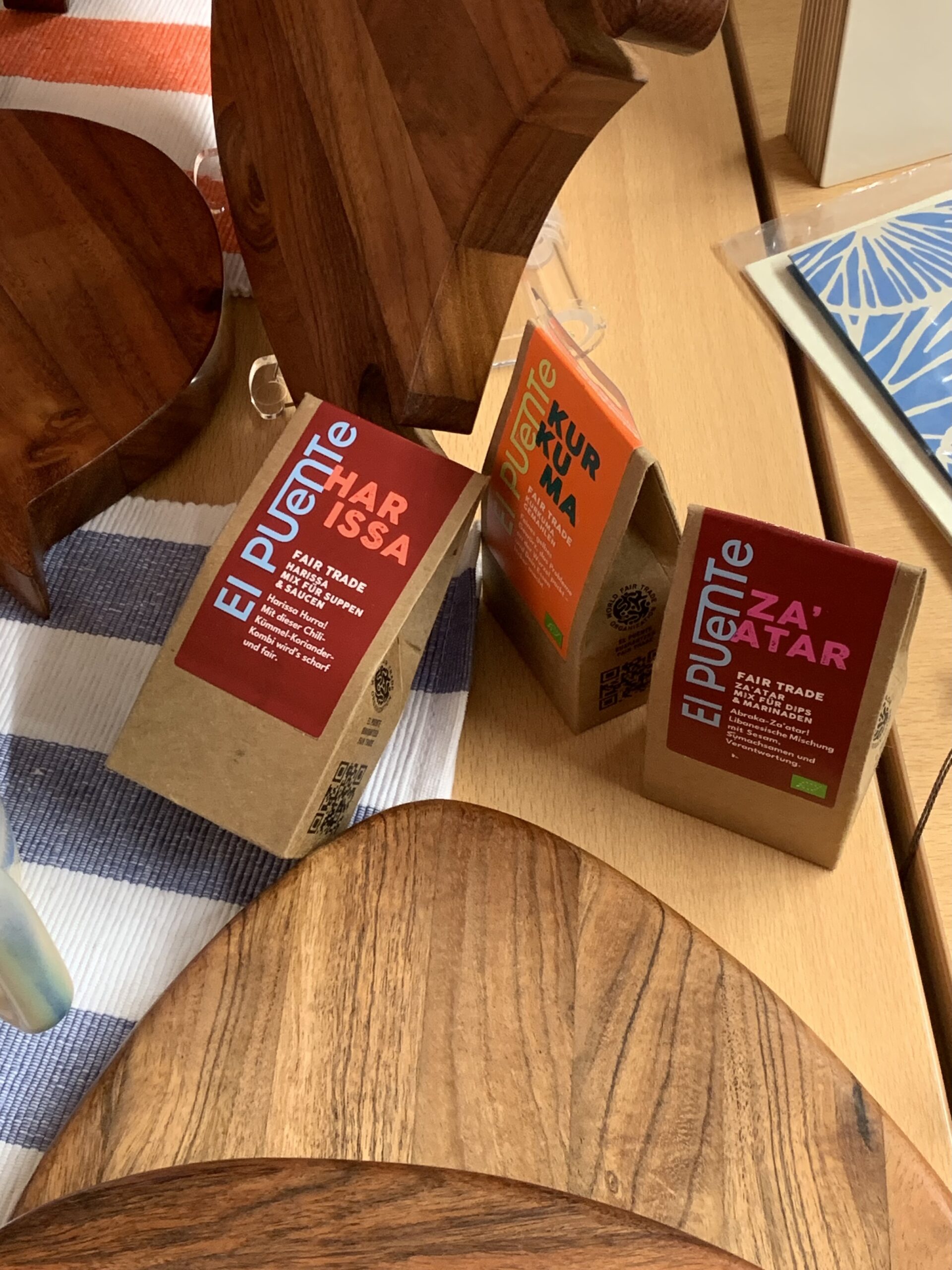
After the school, Philipp and I walked back across the city to the Welthaus to see an exhibition by El Puente (meaning The Bridge), a supplier of fair trade products from the global south. We were going to stay for a talk that they were doing but I was so tired by that stage that we thought go somewhere for a bite to eat instead.
As we left the Welthaus, Philipp explained that he had a gift for Rainbow Turtle from Fürth. He’d meant to present it to me at the celebrations the day before but there was too much going on and he’d forgotten. He then gave me what looked like a large pizza box. I opened it with curiosity to find a metal, handmade clock from Bogota in Colombia. It had been specially commissioned by the city to mark the 10th anniversary.
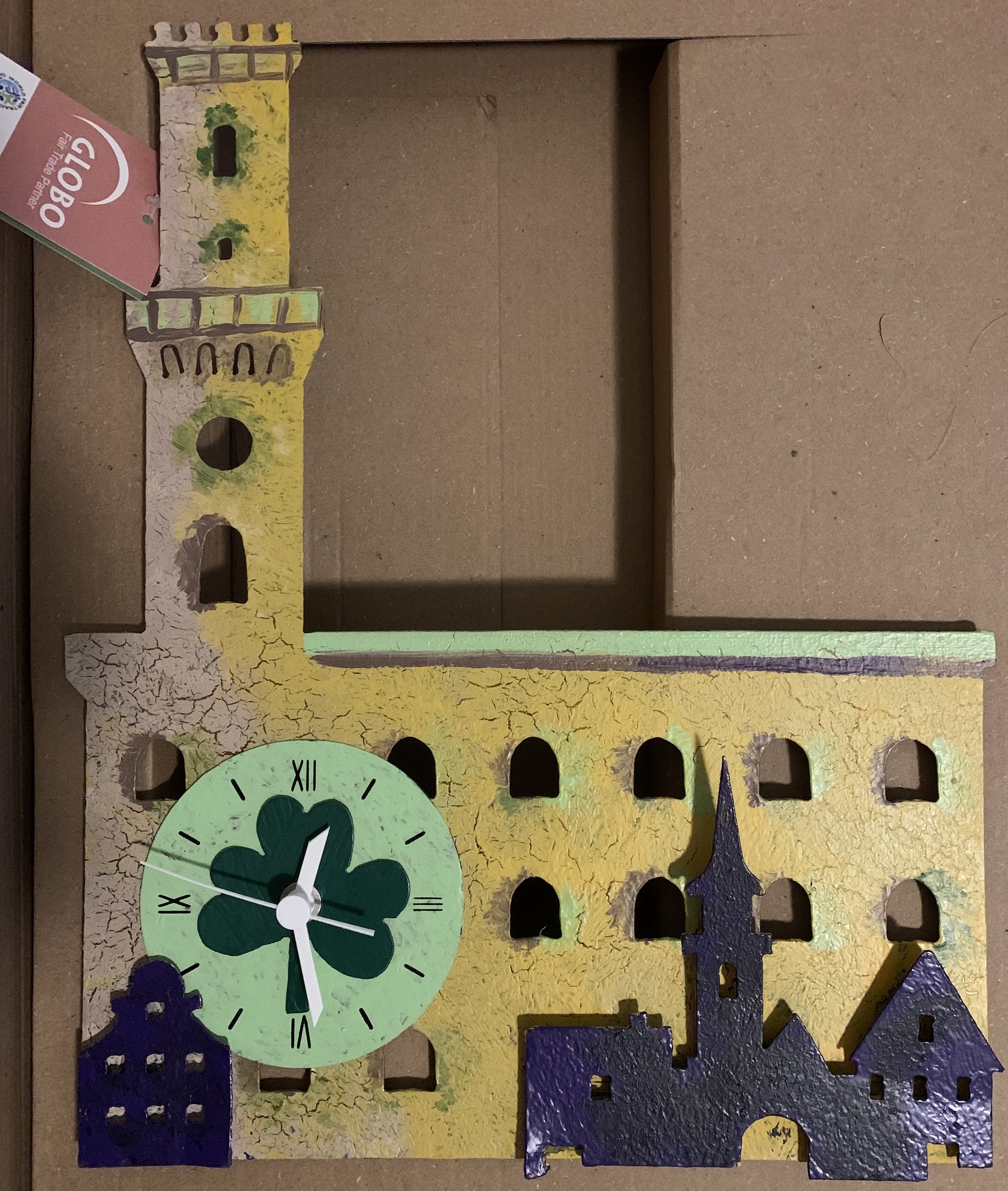
The clock depicts the historic City Hall of Fürth, the shamrock logo, one of the typical coach houses in the bottom left corner and the ancient church of St. Michael’s in the bottom right. I was really moved by their gift, particularly after I’d been so well treated by them all week. (I also thought that the clock would look much better in our kitchen than in the Rainbow Turtle shop…) Philipp also gave me a fair trade football with the city’s logo on it. I promised to try it at my next 5 a side game when I got back to Paisley.
Philipp then took me to the Stubenhocker pub/restuarant where we met by his friend Matt who’d come to see Philipp for the weekend. Philipp and Matt had been in Rwanda together as part of their civic service year (you can hear more about it in my interview with him on our podcast). It was then that I discovered that it was actually Philipp’s stag weekend because he was getting married to his fiancé, Kiki, in May. How did I not know this? Philipp had been so kind in taking me around everywhere that he hadn’t really spoken much about his own private life.
The day ended with me walking back through the now familiar streets to my hotel with my head full of memories and my hands full of gifts to take back home.
Friday 13th
My last day in Fürth and it was with a wee sense of sadness that I packed my bag. I was meeting Philipp outside the usual cafe across from the town hall but this time we were going to his house for breakfast and to meet his fiancé, Kiki. As usual, Philipp turned up on his bike and we hunted all the nearby bike stands for a bike to hire to cycle back to his. Riding a bike through the streets of Fürth felt really liberating and Philipp knew all the quiet roads that avoided the busy streets.
His block of flats had an art deco feel to it and had apparently over time fulfilled various functions from an army barracks to a hospital. I was met at the flat by Kiki, Matt and another of his pals, Jonas, who had also been out in Rwanda at the same time and come for the stag weekend. At that point it was a big secret where they were going but they would be meeting other pals along the way and Philipp would find out when he got there.
Philipp had bought spelt rolls especially for me because I don’t eat wheat. In fact they were of a type called brötchen. These took me back to my childhood when we visited my cousins in Germany. Our various families would meet up on a campsite where we would camp together and in the morning one of us would be sent to the local bakery to buy these delicious rolls with a soft cloudy inside and a crispy crust.
All too soon it was time to head to the station for my train. We cycled back into town where we parked up the bike. It’s such a great idea that you can pick up a bike anywhere and then drop it off. I know we have something similar in Glasgow but I’ve only used it a couple of times.
Philipp and I hugged and said good bye. I felt really grateful for our new found friendship that had come about through fair trade and twinning.
I got on the now familiar double decker train and its short train ride back to Nuremberg. It was only when I sat down on the train to Munich that I could start to reflect on my incredible week in Fürth. I was continually met with kindness from people who also wanted to make the world a fairer place. It reassured my own belief in fair trade and the difference it could make to people’s lives, both to our own and to those living in the global south. The world is such a small place, where we now know that our actions and choices have consequences on other parts.
Postscript
It’s three weeks later and I get an email from Lena Litzinger from the fair trade shop in Fürth. She said that she was in Manchester and could she and her friend stay with us that night? She had mentioned her visit to Scotland to me back in Fürth but I hadn’t really taken the dates in. Then more recently, I’d received an email from Yana who mentioned that Lena would be coming to Scotland in the next week or so (and again it didn’t register!) I quickly messaged my wife, Anne, who was teaching in school, and set to tidying the house and getting their room ready.
Lena and her friend, Thalina, arrived in Paisley railway station that evening having hitched from Manchester to Hamilton. At Hamilton they’d had to switch to bus and train, because lifts were harder to acquire closer to the rush hour. Quite a pair of intrepid travellers.
The next day we headed into Paisley to visit our fair trade shop, Rainbow Turtle. It was lovely to be able to return the compliment to Lena after her care of me at the Weltladen in Fürth.
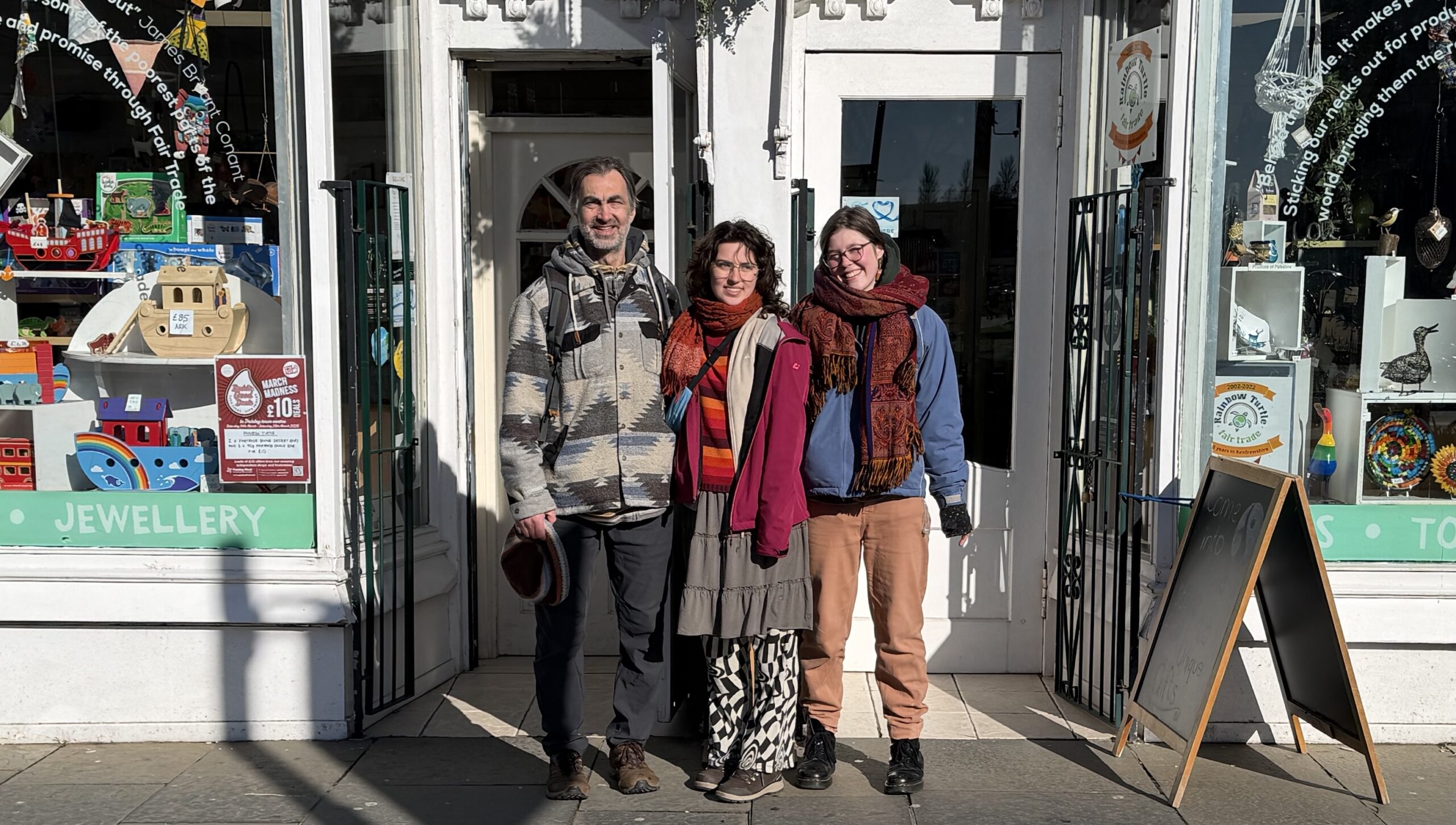
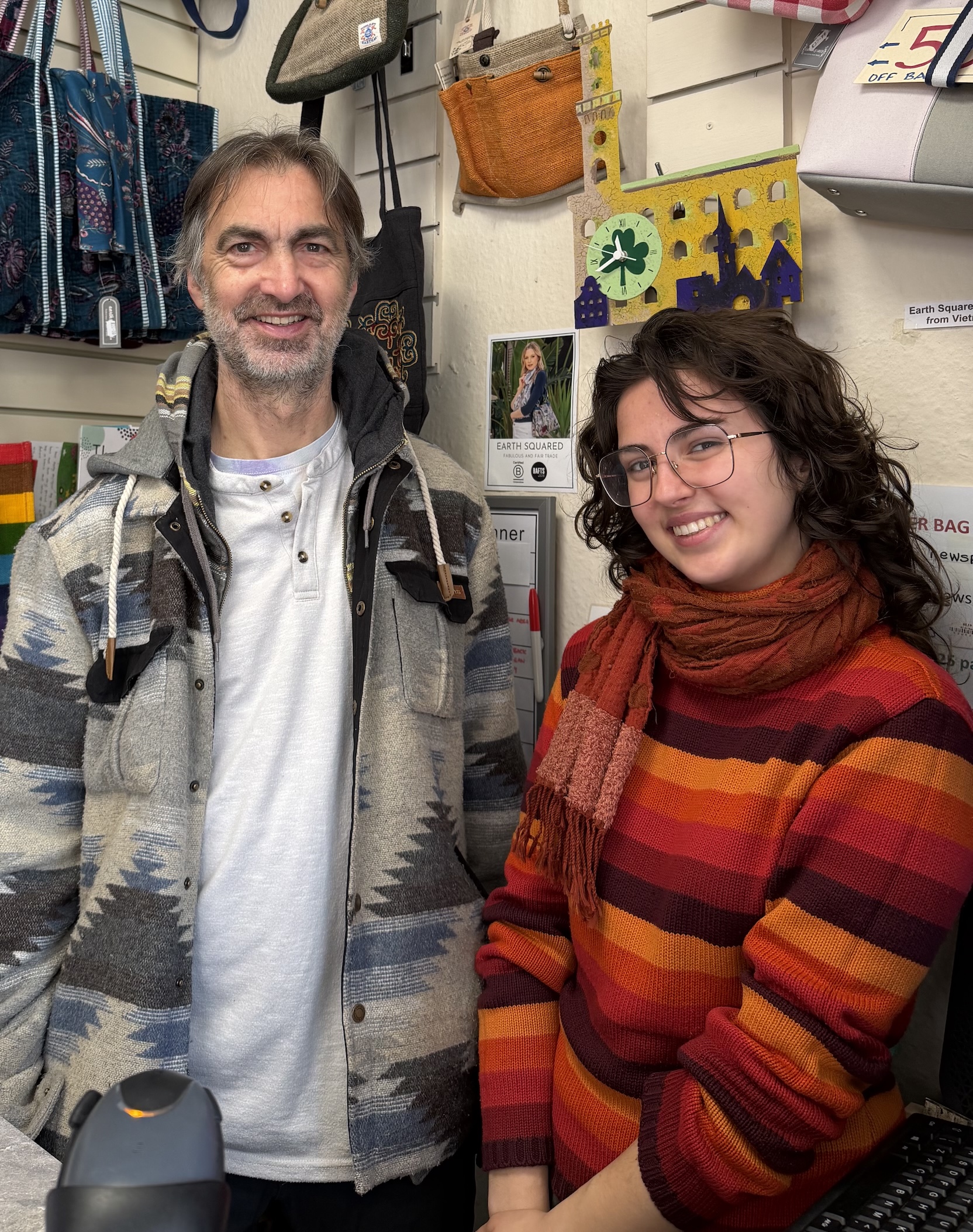
After their brief tour of the shop, I had an online meeting to attend and had to nip back home. Meanwhile, Anne showed Thalina and Lena the delights of Paisley.
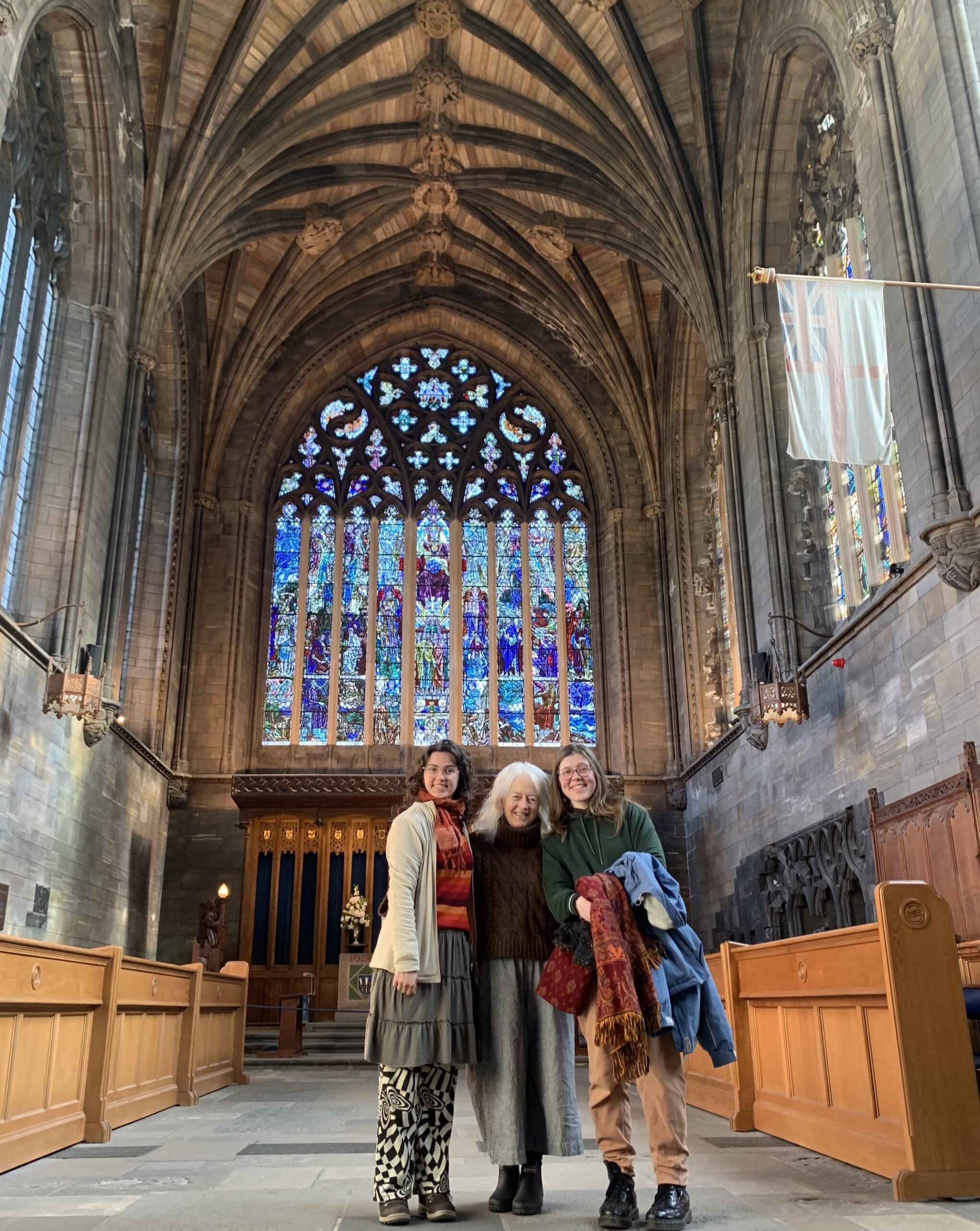
The following day, Lena and Thalina left for Mallaig on the train. As we said goodbye to them, I reflected how a chance meeting, six months earlier, had opened up a whole lot of new connections. My hope was that we could grow others to develop a network of friendships based upon fair trade between our respective towns of Fürth and Paisley.
